Road trip through South Africa
Officially, the Garden Route first runs through the Western Cape province near Mossel Bay and ends in the east of the Tsitsikamma National Park. Most of the Garden Route runs along the N2 national highway. This highway is also the easiest road to travel and is therefore best suited for self-drivers, as well as families.
If you want to start in Cape Town, you will already receive a friendly welcome from the people and the culture. Starting with a visit to this beautiful colourful metropolis below Table Mountain, a variety of national parks and coastal towns follow.
Many of the stops on the Garden Route have plenty of action, sights and activities to offer. And the best thing is: even if you don't have much time, this route is worth it! Of course, the more time you have, the better. But with a total of 10 to 14 days, you can explore a lot here. (For more on this, see: Time Planning.) It is better to spend more time in a few places than rushing from place to place. This is the only way to enjoy the Garden Route and its highlights the most.

Route in 14 days
The "traditional" route of the Garden Route is, as already mentioned, from Cape Town to Port Elizabeth and back. This is exactly the route you can do in 14 days. If you want to drive the route from Port Elizabeth back to Cape Town, but not exactly the same way, I can recommend route R62, which runs more inland and is also called the "Wine Route".
This way you don't have to drive past the same places on your way back and you can also experience part of the so-called 'Karoo'. The Karoo is a semi-desert landscape east of the Garden Route. It leads via Oudtshoorn and Barrydale to the wine regions of Paarl, Stellenbosch and Franschhoek.
But for now, let's get started on the Garden Route with my favourite stops, activities, as well as highlights not to be missed. With the right preparation, you will enjoy the Garden Route immensely. A little call of freedom.
1. cape town
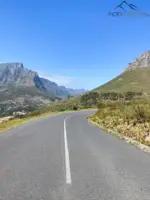
Cape Town is not called one of the most beautiful cities in the world for nothing. This modern, vibrant and multicultural city under Table Mountain reaches the heart of many tourists who themselves have never been on holiday in an African country before.
Whether it's a tour of Table Mountain, a visit to Boo Cape with its colourful houses, a stroll along the Waterfront, sundowners on the white sandy beach in Camps Bay or simply spending a relaxed afternoon in the hip bars. Everything is possible in Cape Town.
My highlight is definitely the Kirstenbosch Botanical Gardens, located on the backside of Table Mountain and also considered one of the most beautiful gardens in the world. The treetop path, which winds through the treetops 11 metres above the ground, is a must-do here! (Entrance costs about 5 euros).

My visits to Cape Town always include a sailing tour on one of the catamarans. The Sundowner Tour is particularly beautiful. Here you sail towards the sunset and get a very special perspective of Cape Town from the water. The tour costs about 40 euros per person and lasts about 2.5 hours. Champagne is included and you can bring your own snacks and drinks. Even though this is a bit more touristy, you will absolutely love the magic of the sunset off Cape Town.
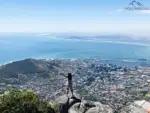
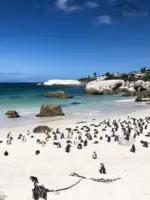
The penguins on the beach in Simon's Town at Boulders Beach, are another great highlight, because where else in the world can you see penguins on the beach! If you have more time in Cape Town, you should also visit the Cape of Good Hope. It is considered a particularly popular photo motif. Table Mountain, Boulders Beach and the Cape of Good Hope are part of the Table Mountain National Park. Unfortunately, you have to pay an entrance fee here every time. (Table Mountain: entrance fee approx. 14 euros without cable car, Boulders Beach: entrance fee approx. 9 euros, Cape of Good Hope: entrance fee approx. 18 euros).

Hermanus (distance Cape Town - Hermanus: approx. 117 kilometres)
The stretch from Cape Town to Hermanus is another highlight and a superlative, as this coastal road called 'Chapman's Peak' is considered one of the most beautiful panoramic roads in the world. And yes, this stretch of coastline will take your breath away. Some bays invite you to stop and take pictures, which you should definitely allow for in your schedule.
Hermanus is the whale-watching capital of the world, and this description is no exaggeration. The entire small town, right on the coast, is completely dedicated to whale watching. If you plan a trip between July and November, you are very likely to really see whales, which unfortunately cannot be promised on the boat tours (2-3 hours, about 30 euros).

I have already done this tour twice (September and October) and was lucky on both tours. If you don't want to go by boat, you can also watch whales with binoculars from the shore and sit comfortably on a bench with a glass of wine in your hand.
My tip: At the end of September/beginning of October, the 'Hermanus Whale Festival' takes place in Hermanus. The whole town is in an uproar to celebrate the return of the southern right whales. It is therefore advisable to book your accommodation early as it can get quite crowded.
Southernmost point - Cape Agulhas (distance Hermanns - Cape Agulhas: approx. 150 kilometres)
As often mistakenly assumed, the Cape of Good Hope is not the southernmost point of South Africa, but is located in the coastal town of Cape Agulhas. A stone plaque has been erected here to inform all visitors that it is not only the southernmost point of Africa, but that two oceans, the Indian Ocean and the Atlantic Ocean, meet here.
A walk along the coast is definitely worthwhile, as you can either visit the lighthouse or come across some shipwrecks on the beach. I would recommend Cape Agulhas as a stop-over. As there is "relatively" little to see here, it is not necessarily worth spending the night. You can allow about two hours for a walk on the beach and a few pictures, which makes for a good transit/lunch stop.
Recommended travel guide
For your trip through South Africa on the Garden Route, I can recommend a good travel guide. It is always worthwhile to inform yourself about everything important in advance. You can find more tips here.

De Hoop Nature Reserve (Distance Cape Agulhas - De Hoop Nature Reserve: 110 kilometres)
If you imagine paradise, De Hoop Nature Reserve comes very close. Endless white sand dunes meet beautiful blue water, partly on dark rocky cliffs, under an even more beautiful blue sky. The landscape reserve is a UNESCO World Heritage Site and is said to be home to around 240 different bird species.
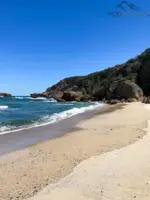
Besides the diverse vegetation (about 1500 plant species, some of them very rare or endangered), you can see the unique wetland 'De Hoop Vlei'. If you are here at the right time, you can also go whale watching at De Hoop Nature Reserve. The entrance fee to De Hoop Nature Reserve is about 3 euros. It is certainly a good idea to plan an overnight stay here.
Great things to do in South Africa
Activity | Price | Ticket |
Quad-Biking through the mountains and Fynbos Drive, Hermanus | from 51 Euro | |
Cage Diving with Great White Shark in Mossel Bay | from 156 Euro | |
The highest bridge bungy in the world, 216 m from Bloukrans Bridge | from 85 Euro | |
Tandem parachute jump from 9000 ft near Cape Town | from 185 Euro | |
Port Elizabeth: Addo Elephant National Park Land Excursion | from 121 Euro |
5. Mossel Bay (Distance De Hoop Nature Reserve - Mossel Bay: 252 kilometres)
Few people know that Mossel Bay has the second best climate in the world, surpassed only by Hawaii. As De Hoop Nature Reserve is not far away, you could book an overnight stay on the legendary Santos Express train and plan a day trip to De Hoop Nature Reserve. Mossel Bay is often a little underestimated and mostly used as a stopover on the way through, which is fine.

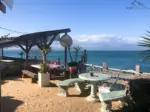
If you just want to make a stopover, I can recommend the Kaai 4 Braai Restaurant, which is right by the sea and has its own unique charm. Braai is the South African word for barbecue. Here, many dishes are prepared directly on the fire. With your feet in the sand and your head towards the sun and the sea, this exceptional place invites you to relax. Mossel Bay wouldn't be Mossel Bay if you didn't try the traditional mussel dish at least once. If you prefer something a little more dignified, there is the Oyster Bar next door, which serves oyster shots with Tabasco and vodka.
As the Garden Route Game Lodge is only about 20 km away from Mossel Bay, it is possible to go on a Big 5 safari. The Garden Route Game Lodge is situated in Albertinia, a malaria-free area. The reserve offers day tours or overnight stays. The 4-star accommodation allows you to get up close to rhino, lion, buffalo, leopard and elephant. Of course, you won't always be lucky enough to see all of the Big 5, but a professional guide will introduce you to South Africa's wildlife on your safari. You can stay overnight in a traditional wooden chalet. A breathtaking South African starry sky is included.
I have summarised the most beautiful national parks in South Africa in my article. Feel free to drop by.

6 George and Wilderness (distance Mossel Bay - George: 53 kilometres)
The beautiful town of George is situated a little inland and offers a variety of different activities such as water sports, horse riding, mountain biking and hiking. A particularly beautiful hike is the tour to the Map-of-Africa-Viewpoint, which offers you a breathtaking view of the valley around the Kaaimans River.
If you want to take it easy and admire the area from the car, the Mantagu Pass is a good option. On the way back, you can take the Outeniqua Pass. The Seven Passes Road is more exotic. As the name suggests, seven passes await you along gorges, forests and valleys.

Wilderness is a great coastal town in the Western Cape, with an 8-kilometre-long white sand beach and many small lagoons. Characterised by backpackers and nature lovers, Wilderness has a very special atmosphere. The Garden Route National Park begins at Touws River. This national park has existed since 1964 and combines about 80 kilometres of coastline. It extends to the east of the Tsitsikamma area. Wilderness also has beautiful hiking trails or canoe tours that you can book locally. Bird watching is at the top of the activity list here. So get your binoculars out and keep your eyes peeled!
7 Knysna (distance George - Knysna: 63 kilometres)
Knysna (pronounced Nei-sna) is a beautiful town along the N2 and a special part of the Garden Route, as the Garden Route National Park meanders on here too. Knysna is known for its blue lagoon and its dangerous harbour entrance, which is one of the most dangerous in the world.
It is not only the impressive cliffs of Knysna Heads, but also the less than 200-metre wide entrance that is a real feat for any captain. The imposing Outeniqua Mountains rise in the background, ensuring that Knysna has a mild climate all year round and you can even swim in the Indian Ocean in winter.
Knysna is home to one of the largest remaining indigenous forests, so a hike along the Knysna Forest Trail is highly recommended and worth seeing. The Featherbed Nature Reserve offers a great boat trip across the lagoon, which by the way is a freshwater lagoon. Afterwards, you will drive through the reserve in an open jeep.
High up, you have a special view over the lagoon and the city. Tours start at 15 euros. A special overnight option is one of the many houseboats anchored in the lagoon. Somewhat daring and suitable for adventurers, this unusual accommodation offers the opportunity to experience the lagoon more intensively from the water.
8 Plettenberg Bay (Distance Knysna - Plettenberg Bay: 31 kilometres)
Plettenberg Bay is situated in the Western Cape province and is a paradise for surfers and water rats. Plettenberg is a little beauty, of which the inhabitants are also a little proud. Because Plettenberg is loved by tourists, especially because of its extensive sandy beaches. Keurboomstrand beach, which lies in the north-east, is one of the most beautiful beaches in South Africa.
But Look Out Beach and Central Beach are also real beauties. So it's no wonder that many make Plettenberg their bathing stop. Whether surfing, paddling, snorkelling or diving. The options seem endless. For a special hike, head to Robberg Nature Reserve. This is one of my favourite hikes in Plettenberg. The tour on the Robberg Peninsula takes you past imposing dunes, cliffs and the not-so-smelly but all the sweeter to look at seals.

9 Tsitsikamma (Distance Plettenberg Bay - Tsitsikamma: 65 kilometres)
The Tsitsikamma National Park, which is also part of the Garden Route National Park, is one of my absolute favourite places in South Africa, if not in the whole world! The Tsitsikamma area will remind you a bit of Germany with its wide fields where cows graze in front of the huge mountains.

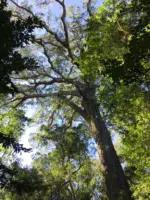
A few metres further on, the forests begin, with a huge variety of flora and fauna, and the Outeniqua trees shining in all their glory. At the Big Trees there is a great walking trail (you have to pay a small entrance fee here) that takes you to one of the largest tree species in South Africa.
These trees can reach up to 45 metres in height. It's definitely worth it and no matter how many times I've been there, these giants never cease to amaze me. Nevertheless, in the Tsitsikamma you will also find the ocean and many other opportunities to be active and adventurous. The Suspension Bridge, in the Tsitsikamma National Park, is not to be missed. There you can book various activities such as white water rafting or canoe tours. If you are looking for more adrenaline, you can jump from the world's highest bungee bridge, the Bloukrans Bridge.
The Tsitsikamma area is an absolute highlight on your Garden Route trip and should be given due attention. You can easily spend a whole week here. I would recommend at least two nights.
A little insider tip is my favourite cheese farm, the Fynboshoek Cheesefarm. This hitherto well-kept secret gem is hidden under big trees by a lake and in wild nature, so you can really unwind here. Here you can enjoy a great lunch for about 15 euros. All ingredients come from their own production, either from their own garden or their own cheese production.

The directly adjacent small villa can accommodate 4 people. An overnight stay here costs about 55 euros. There is no electricity, which makes the overnight stay a very special experience. Here I felt like I did 100 years ago and could really switch off.
10 Jeffreys Bay (distance Tsitsikamma - Jeffreys Bay: 106 kilometres)
Although Jeffreys Bay is not the biggest town, Jeffreys Bay is THE term for all surfers in the world. Because of the best waves (some are up to three metres high), the elite and those who want to learn to surf meet here. This gives the small town a particularly hip and cool atmosphere. Small trendy bars, surf shops, outlet centres and delicious seafood restaurants - that's what you'll find in Jeffreys Bay.
Jeffreys Bay is well worth a stop. If water is not your thing, you can try other activities such as sandboarding or volleyball. Jeffreys Bay has cool hostels that are also clean. If you like to socialise with people and can do without comfort, you should definitely book one of the hostels.

11 Port Elizabeth and Addo Elephant Park (Distance Jeffreys Bay - Port Elizabeth: 80 kilometres)
PortElizabeth has an airport from where you can also start or finish the Garden Route. One thing you have to know about Port Elizabeth: it is always windy here! This can sometimes make it difficult to enjoy the beach at the very beautiful beaches, such as Humewood Beach or Summerstrand Beach. So before you go to the beach, check the weather and the wind!
Port Elizabeth is, however, a very good starting point for further safari adventures. The luxurious 5-star Shamwari Game Reserve, for example, has hosted several stars and starlets. Per night, per person, you can easily calculate with over 1,000 euros. For those who dare to play ranger themselves, the Addo Elephant National Park is the place to go.
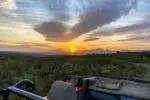
Addo Elephant National Park is the largest national park in the Eastern Cape and the only one that is home not only to the Big 5, but also the Big 7 (including whale and shark). It is located about 1.5 hours from Port Elizabeth. You can explore the park as a self-driver, which is very safe. If you prefer to have a guide with you so that you can concentrate better on the animals, you can also book a guided safari tour in an open jeep in the park. I

In the park itself there are also possibilities to stay overnight, various private lodges or directly from the Addo Elephant Park, also offer suitable accommodation for every budget.

Return via the R62
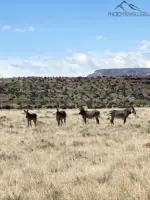
If you don't want to travel the same way or take a flight back to Cape Town, you can take the R62 back to Cape Town. There, a slightly different landscape awaits you from what you have seen so far on the coast. The R62 leads through the semi-desert landscape of the Klein Karoo. It runs along the towns of Montagu, Calitzdorp, Oudtshoorn and Joubertina. Basically, it connects Port Elizabeth with Cape Town, just not along the coast but inland, which can be a good change of pace.
If you decide to take this route for the way back, you must not miss these two stops:
Oudtshoorn
Oudtshoorn used to be the centre of the road farming industry. That's why you'll find many ostrich farms here. Many are rather touristy and whether you want to ride an ostrich or not is up to you. In general, you can learn a lot about the rearing and use of ostriches, and some of the accommodation is really great.
If Oudtshoorn is on your itinerary, you should definitely visit the Cango Caves. These caves are considered one of the most beautiful cave systems in the world. Two different tours are offered. A normal round tour (Heritage Tour, approx. 10 euros) and an action tour (Adventure Tour, approx. 13 euros), which will test your resilience in terms of claustrophobia.
Tip: Book a Meerkat Tour for Oudtshoorn. The cute meerkats will take your heart by storm. You'll have to get up early, but you won't soon forget these cute animals.
Winelands
Around Stellenbosch, Paarl and Franschhoek you have arrived in the wine paradise, the Winelands. Here, countless chic, quaint and historic wine estates await you, with excellent wine and great tasting options. Particularly impressive is the enchanting and graceful landscape.
Green vineyards and meadows with thick vines under the South African sun will offer you a very special kind of relaxation and recreation. Many wineries offer overnight accommodation or other activities such as wine tours, picnics, guided tours or walks through the vineyards.

The Waterford Wine Estate is particularly beautiful. I always feel a bit like I'm in Italy there. On Sundays and in good weather, it is advisable to book in advance. With the Wine Tram, a small double-decker train, you can explore the landscape and surroundings even better and be driven from wine farm to wine farm without a car. The hop-on/hop-off tour is available from Franschhoek and costs about 32 euros.

Best time to travel
As autumn starts in South Africa in March and April, temperatures are mild and not too warm. The best time to travel the Garden Route are the months of September and October, when you can expect some rain showers from time to time, but the temperatures are between a pleasant 15 and 25 degrees.
Those who like it really hot should consider the months of November to January. But since December is the holiday season in South Africa (summer holidays), you have to expect a few more holidaymakers on the streets. Also, some accommodation can be fully booked, so it is best to book half a year in advance if you want to travel in the South African summer months.

Practical clothing for the Garden Route
Preparations
You can easily book a rental car from Germany via an internet provider. You do not need a four-wheel drive car for the Garden Route, unless you want to visit special activities or accommodation where it is explicitly stated that you need a four-wheel drive car. Otherwise, a normal car is perfectly adequate.
Look at the route. Where do you want to stay and what activities or highlights do you want to see? Make a priority list and plan what you really want to see and what sights or activities would be an option. There are countless stops along the Garden Route, so a rough pre-selection is definitely recommended.
In general, it is advisable to plan a little more time for the route than Google Maps or navigation systems indicate. Firstly, you always need a little longer and secondly, if you do want to make an unplanned stop somewhere, this should not upset your schedule.
When it comes to luggage, you should be prepared for anything here, as temperatures can fluctuate extremely. If it's warm and sunny during the day, it can get uncomfortably cold at night. So you should bring everything from short clothes to a hat and a thicker jacket. My tip: The onion principle always works!
Your luggage should also include a camera. Especially on the coastal sections there are beautiful bays where you will stop and take breathtaking photos. For the entire Garden Route plus activities, the purchase of a good camera is absolutely recommended, as even a good mobile phone quickly reaches its limits due to the vastness of the landscapes.
Socket adapters (converters from South African sockets to German sockets), torch, binoculars, first-aid kit, sunscreen and mosquito repellent should also be in your luggage. You can book accommodation easily and without problems via well-known booking platforms.
Tips for self-drivers
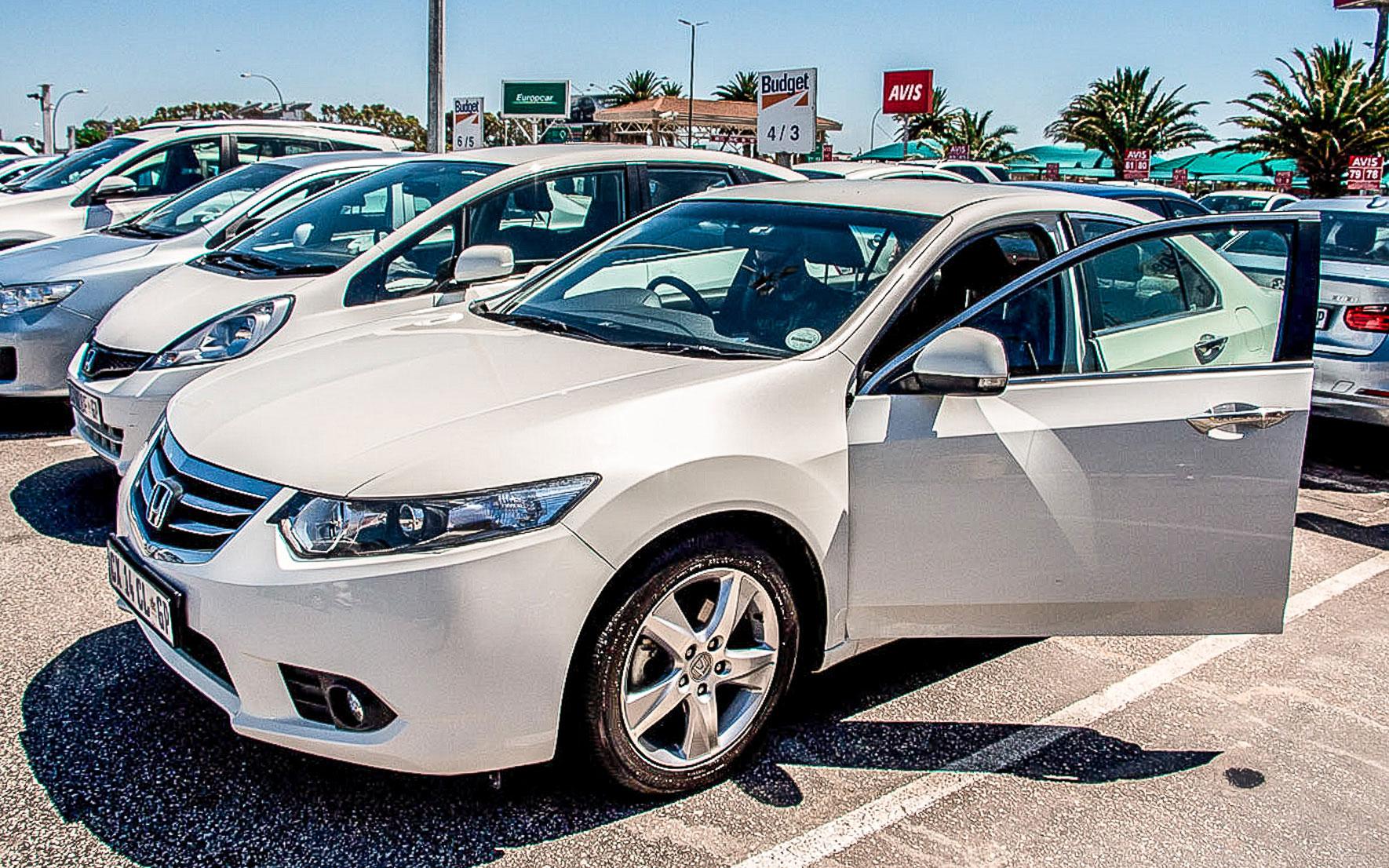
When you pick up your rental car at the airport or at the rental car company, take a good look at the damage to the car that has been reported so far and add any damage that you notice, no matter how small and insignificant it may be. Make sure you have comprehensive insurance for your car, including tyres and windscreen cover. Unfortunately, stone chips in particular can occur more frequently.
What I cannot recommend under any circumstances is driving in the dark. Generally, the Garden Route is a safe route, but you should really avoid driving in the dark. There are often goats, cows and many pedestrians on the roads. Caution is advised even in daylight, so driving at night can be quite a strain.
Important: Never leave luggage or valuables visible in the car. While driving and especially at traffic lights, it is advisable to always lock the doors. In general, be careful and look around. If you follow these simple rules, nothing will stand in the way of a relaxed holiday. Most people in South Africa are very friendly and helpful to tourists.

Timing
As mentioned at the beginning, the Garden Route is a great destination even for those with less time. In general, you should keep in mind that sometimes less is more. If you don't plan so many stops, you can explore your surroundings more intensively and perhaps discover a few insider tips.
If you plan to do the Garden Route from Cape Town to Port Elizabeth, you should allow an ideal time of 7-10 days for this route. If you then want to return to Cape Town and perhaps take a different route or make other stops, you should allow at least an additional 5 days.
After all, the one-way journey between Cape Town and Port Elizabeth is about 800 kilometres. All in all, this means that a holiday of at least 14 days will give you a good overview of the Garden Route and the country of South Africa. Personally, I find that 21 days are ideal to be able to stay longer in one place, or to be more flexible in rescheduling in case of bad weather.

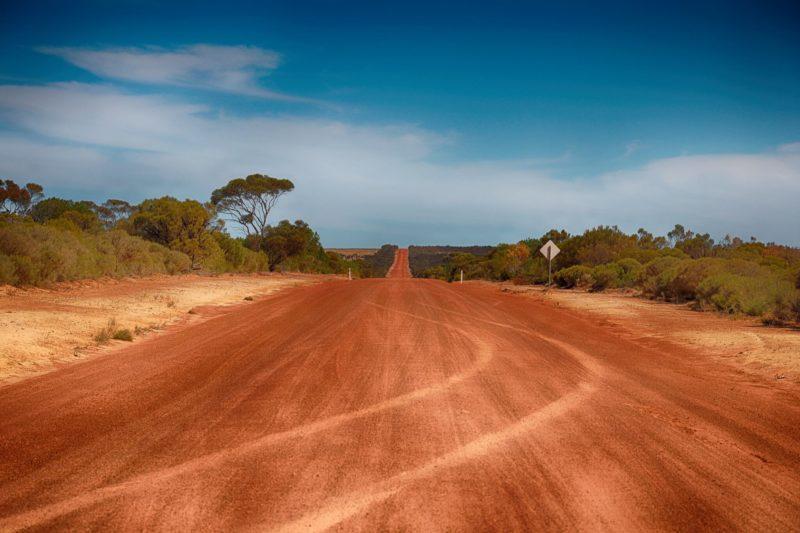
In general, the Garden Route is not only the most popular route, but also by far one of the most beautiful. The diversity of the country will absolutely inspire you and the sometimes empty and endless roads will also send your mind on a journey.
South Africa is a country of many superlatives, which you will encounter on the Garden Route. Combined with the culture of the country and the incredibly friendly people, the sun, the endless sandy beaches and the free lifestyle, nothing stands in the way of this road trip perhaps becoming the tour of a lifetime.