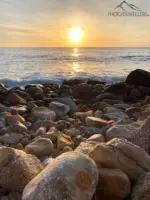
Discovering Namibia and especially Botswana as a self-driver is one of the most enormous adventures we have experienced so far. Here comes our travel report with our experiences. The conclusion could be: Lots of elephants, unforgettable safaris, rocky deep sand tracks and exciting nights in the roof tent.
That could be my conclusion after my 3.5-week trip to Botswana. Botswana is a special country that is dedicated to animal conservation and the slogan "low capacity high value". Without animals - no tourists. What does that mean? Fewer tourists, less stress for animals, fewer accommodations, and these are then more exclusive and cost more money.
But despite the high costs, I would love to travel to Botswana again immediately. I have never been able to see such large herds of animals live on any of my trips to Africa.
Here you can find my personal travel report for three and a half weeks in Botswana and Namibia with a rental car from/to Windhoek.
Including information about the places we visited, our route, distances, activities and where we stayed.
Why Botswana as a travel destination?
Why? Simple: I love southern Africa, I love animals, nature and adventure! All of that is in abundance in Botswana! Especially elephants!
It's true that everything is exclusive, because compared to the neighbouring countries Namibia and South Africa, the prices for self-drivers with roof tents on camping sites are not cheap either. On the other hand, you are not surrounded by crowds of tourists during the main tourist seasons. At national parks you hardly meet any other cars. Except at the junction in Kasane, where not only visitors to the Chobe National Park but also day-trippers for the Victoria Falls in Zimbabwe/Zambia are bustling about.
I was eager to drive myself and take on the new challenge of deep sand tracks. I wanted to spend the night in a roof tent to better observe the sky over Africa, but I also wanted to visit more luxurious accommodation.
The insanely fascinating landscapes that seem barren during the dry season. Yet so fascinating and variedly different. Whether Central Kalahari, Salt Pans, Okavango Delta or Chobe National Park.
A mixture of adventure and even more adventurers.
Our route: Namibia-Botswana Road Trip
In 25 days from Windhoek (Namibia) via the Zambezi region (Caprivi Strip) to Botswana and back.
Botswana is as big as France and Belgium together. Despite having almost 4 weeks, I only saw a fraction of the country. We covered the route marked on the map in 25 days. We drove a total of 3619.7 km. Without flat tyres or getting stuck in deep sand.
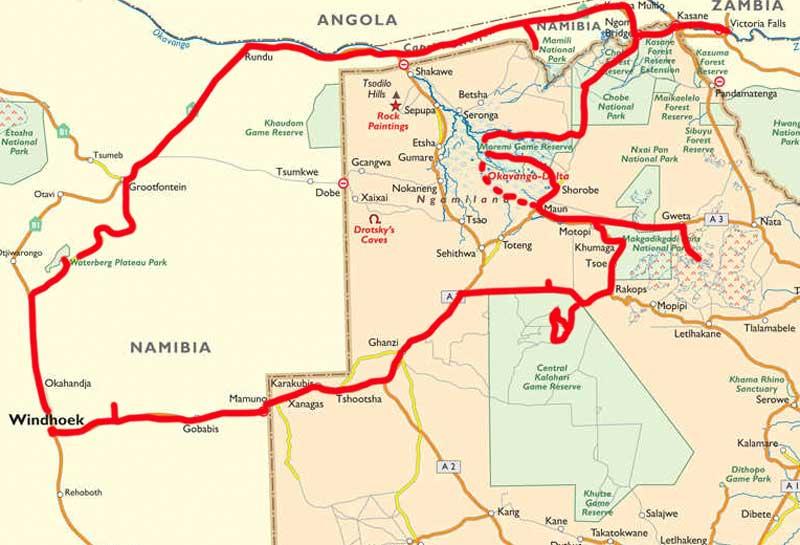
Windhoek
Waterberg Plateau
Rundu (on the Okavango)
Kongola (Zambezi formerly Caprivi Strip)
Chobe National Park, Kasane with day trip to Victoria Falls (Zimbabwe)
Chobe National Park, Savuti
Moremi, Third Bridge
Okavango Delta
Maun
Gweta incl. 1 night Ntwetwe Pan
Central Kalahari Game Reserve
Ghanzi
Windhoek
(Click on the links to read detailed travel reports on the individual places. All other articles will follow as soon as possible )
A detailed list of my Botswana round trip can be found here as a free downloadable PDF with all distances, travel times, accommodation and activities undertaken:
Botswana round trip overview as PDF download.
Hints: Next time I would follow my original plan and take more time in the Caprivi, plan more overnight stays at campsites in Chobe National Park (Linyanti, Savuti) and Moremi. Then I dare to drive through the CKGR instead of staying in a lodge outside. Although the lodge was really great. The drive from there to the entrance takes 1.5 h and is simply exhausting.
Deciding on a route is not so easy
It is not so easy to decide which places you should have seen on a trip through Botswana. The country is huge, the choice of impressive places numerous, the distances great. In any case, a single trip to Botswana is not enough to visit all the highlights and my favourite places.
Windhoek - the perfect starting point for a road trip
Like so many other tourists, Windhoek serves as the starting and ending point of our trip. The capital of Namibia with its approximately 250,000 inhabitants is quite cosy and very relaxed for an African city.
We pick up our rental car at Asco Car Hires, buy supplies (especially water) for our road trip in the supermarket and enjoy the evening in the very cosy Joes Beerhouse with friends. Here, tourists mingle with locals in a rustic beer garden.
Read the complete report on Windhoek with tips and places worth seeing here.

Windhoek, the capital of Namibia
Accommodation in Windhoek:
After arriving in Germany, we stayed for one night in the very cosy but very modernly furnished Villa Moringa Guesthouse in Klein Windhoek.
Before our flight back to Germany, we spent one night at the luxuriously located N/a'an ku sê Charity Lodge & Wildlife Sanctuary (Naankuse Lodge) in Namibia's nature.

The pool is in the middle of the wasteland, but offers a wonderful view. Waterberg Plateau - Table Mountain of the Kalahari
The next morning we drive well rested to the Waterberg Plateau - the "Table Mountain of the Kalahari", which is 1,900 m above sea level and 48 km long. We leave Windhoek heading north. The road is tarred except for the last kilometres of gravel and sand and is in good condition. The drive takes about four hours.
Read more: Full report on the Waterberg Plateau

The road on the way to the Waterberg Plateau
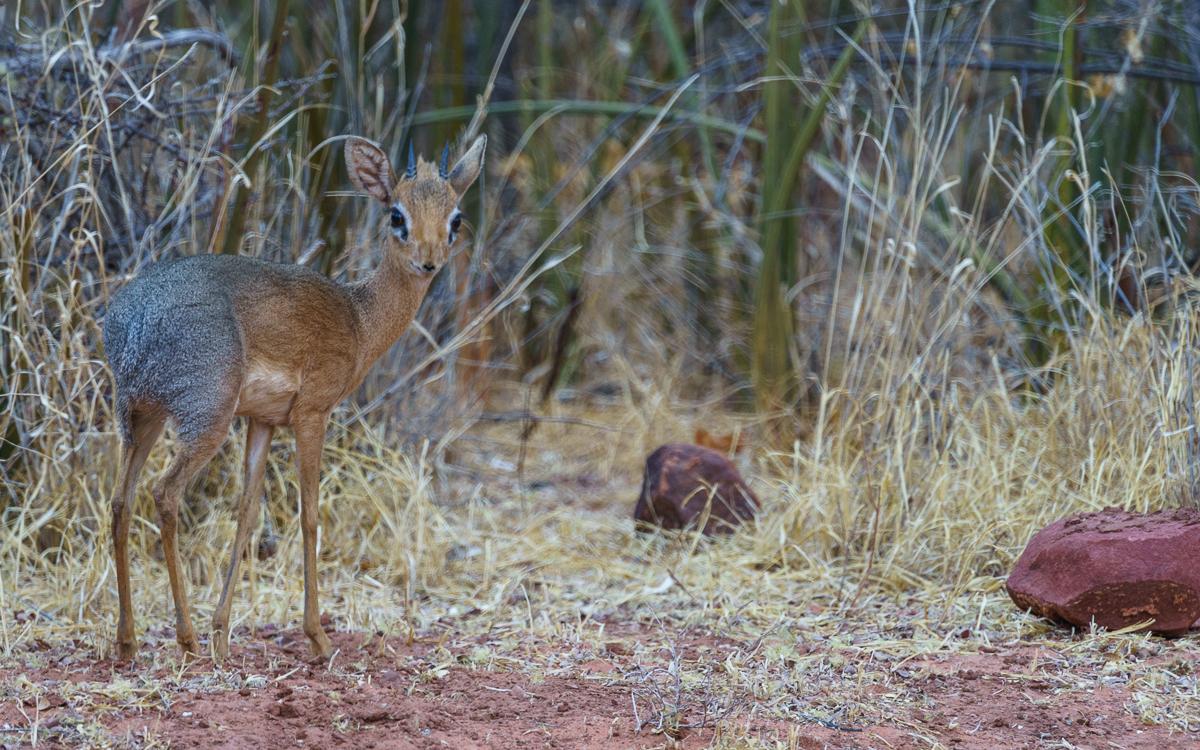
Here we spend the night at the Waterberg Wilderness Lodge, situated on the edge of the mountain in the Waterberg Wilderness Private Nature Reserve. Endangered animal species such as the rhinos brought from South Africa and reintroduced to the area find protection here. There are also eland, giraffe and dik diks. Unique to Namibia, there are buffalo here.
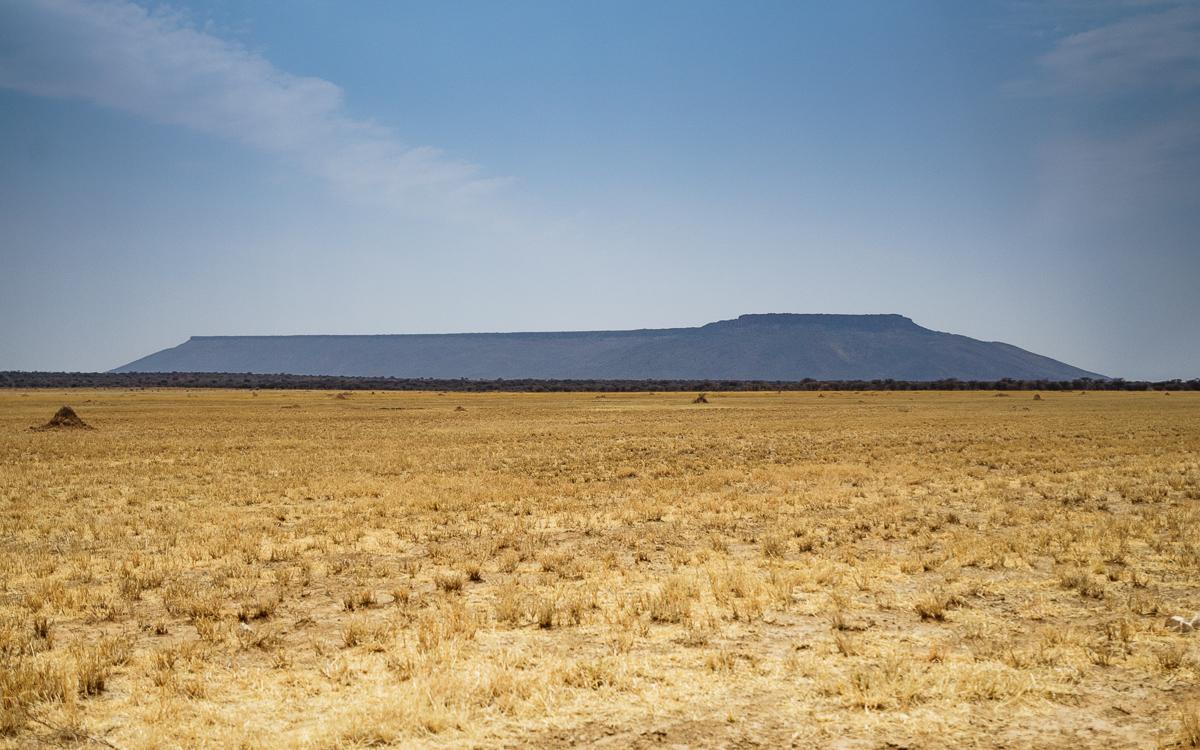
Waterberg Plateau Namibia
The Waterberg owes its name to the springs on the south-eastern slope. At Waterberg Wilderness Lodge there is therefore excellent drinking water from the tap, which you can also buy bottled.
Historically, the plateau achieved sad fame. The biggest battle between the Herero and the German Schutztruppe took place here in 1904.
Rhino Drive in the afternoon
In the afternoon we take part in a rhino drive. The private game reserve has three rhinos, and we now go in search of them. We see hornbill birds, wildebeest, impala, mongoose, giraffe and last but not least the rhino.
At some point we stop, the rhinos have been found. We walk the last few metres. We get incredibly close (about 5 metres) to the endangered animals. I reverently keep my distance and move into the second row.


For sundowner we have Savanna Dry and in the evening we eat a multi-course meal together with the marketing manager of the lodge, until we fall into bed dog-tired from all the impressions.
After a hearty breakfast in the morning, we continue on to Rundu, in the north of Namibia.
Information about the Rhino Drive: The Rhino Drive takes 2 - 3 hours.
Accommodation on the Waterberg Plateau: Waterberg Wilderness Lodge
The lodge is situated in a picturesque valley surrounded by shady trees. Once farmland, the nature reserve is now used to provide jobs for the locals and at the same time to reintroduce native game that had been wiped out.
The extensive self-sufficiency through solar power and hot water with firewood from de-bushing is testimony to the lodge's eco-concept. Thanks to the nearby spring, you can even drink the water from the tap. The game meat in the restaurant also only comes from stocks that have been regulated.
Link to the website of the lodge
Read the complete report on Waterberg Wilderness Lodge here.

Waterberg Wilderness Lodge View Rundu
On the drive to Rundu we get further and further into untouristy Namibia, a picturesque but barren box savannah landscape. The colours remind me of home in autumn.
Hakusembe River Lodge is situated 17 km outside Rundu directly on the Okavango River. When we arrive, it is extremely hot and the air is dry.
Due to its location directly on the Angolan border, the number of Angolan people here is increasing. Although there is not much else to see in Rundu, there are several lodges here, such as the Hakusembe River Lodgewhich is located 17 km outside of Rundu. Here we check in.

Hakusembe Lodge is situated directly on the Okavango River.
The lodge offers more luxurious rooms as well as a beautifully situated campsite. We choose the campsite. Campsite 1 with a view of the Okavango and Angola, which is only a few metres away, is ours.
The luxurious thing about the campsite: the neighbours are more than 100 metres away and each campsite even has a lockable shower and washroom with an outdoor sink, electricity and a barbecue. Ideal place, therefore, to make a stopover before our onward journey across the Caprivi Strip to Botswana.

Our stable site at Hakusembe Lodge 
Our 1st night in the roof tent at the Okavango River:

The view from our roof tent of the Okavango River and Angola
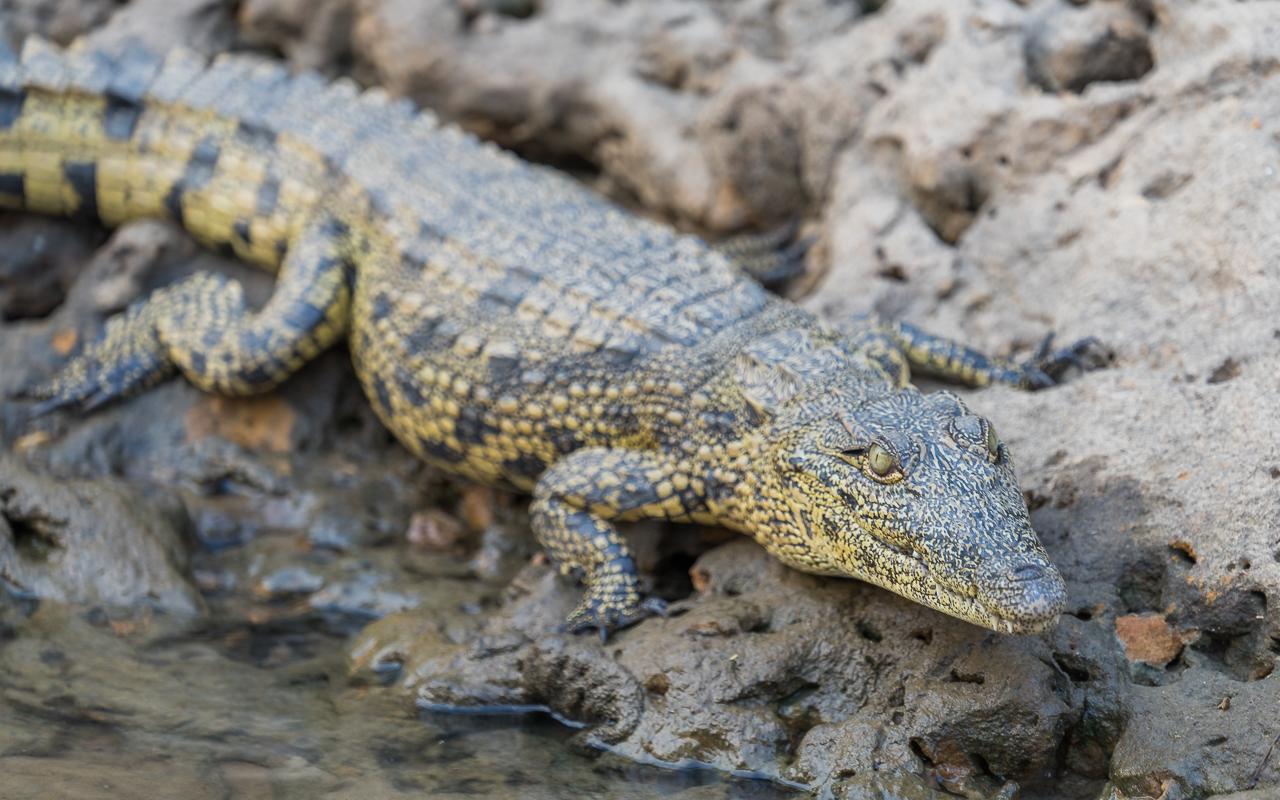
We take a boat trip on the Okavango at sunset. From time to time we see hippos (unfortunately not us) or crocodiles. But mainly birds. The region is therefore quite popular with bird lovers.
From the boat you can watch Angolans on the other side of the river going about their daily lives. Tilling fields, washing clothes in the river, feeding cows or children waving at us. I feel a bit like I'm in a zoo, because our guide stops exactly where the people are. I would have imagined the tour a little differently. The other tourists on board like it, while I feel increasingly uncomfortable.

Children on the Anglo side wave to us. Their parents wish we could throw them something to eat. Unfortunately, we are unable to do so.
At sunset, anglers arrive in their mokoro (dugout canoes) to catch a fish or two. The Okavango is a fascinating river. The sunset is beautifully intense and the campsite a dream.

The night is short, as I keep waking up to the wind whipping against our tent canvas. But the mattress and the roof tent were super comfortable! I am thrilled.
From 6 o'clock in the morning, loud dancehall music resounds from the Angolan neighbouring shore and a rooster starts the day with its loud crowing.
But the music drowns everything out, so we get up shortly before seven and take down the roof tent. That goes surprisingly quickly, we can even leave our pillows and blankets inside. Perfect!
After breakfast at the lodge, we drive on to Kongola in the Zambezi Region (formerly Caprivi).
Accommodation in Rundu: Hakusembe River Lodge Campsite
Hakusembe River Lodge is ideal if you want to stay overnight again on the way to the Caprivi (now Zambezi Region). The lodge and the campsite are idyllically situated on the Okavango River. If you arrive in the early afternoon, you can take the boat tour at sunset and continue the next day.
There is not much else to experience here. The lodge is middle class, the campsite first class for us and really recommendable!
Link to the website of the lodge
Kongola (Zambezi Region, formerly Caprivi)
The drive from Rundu to Kongola takes us through the Zambezi Region, which today is often still called the Caprivi Strip. But the name has actually been changed. Here communities and animals live side by side in harmony with nature.
The drive through the Caprivi Westlands Paradise and the Bwabwata National Park (formerly Caprivi Camp Park) takes us for two hours on a good tarred road to Divundu.

To the left and right of the road are small huts made of straw, wood and mud. They sell either firewood or straw. The preferred building material for building fences or for the roofs of the huts.

After a total of five hours drive, we reach Namushasha River Lodge on the Kwando River. The campsite has 16 sites, each with its own hut for sink, shower, bathroom, toilet and electricity. We are even faster at pitching our tents today.
The lodge offers game drives in the Bwabata National Park and boat cruises on the Kwando River. We take part in both, as we stay here for two nights.

Large herds of elephants can be found in the Zambezi region on game drives.
We also take a nature walk to a small heritage centre where we can experience how people lived here until a few years ago.
They sing, dance and laugh in their traditional dress. The project is supported by the lodge to involve the communities. This is the only reason we visit this place, as it is already very touristy.


The Zambezi region is a foretaste of what awaits us in Botswana: lots of elephants, hippos, giraffes, wildebeest, impala, tsessebe, herds of buffalo and African Fish Eagle.


Unfortunately, we miss lions and wild cats by a few hours. The only remnant of the hunt: a small baby elephant. Hollowed out and eaten down to the bone, the lifeless shell lies in the bush - still undiscovered by hyenas.

Accommodation in Kongola - Zambezi Region: Namushasha River Lodge
Here we spent one night each on the campsite and one in a room at the lodge. The campsite was beautifully situated on the river. The rooms only a few metres further with almost the same view.
I can recommend both, depending on the type of trip, the lodge is a beautiful place to explore the Zambezi region.
Link to the website of the lodge


Kasane: Chobe Riverfront and Victoria Falls
It takes us just under four hours to cover the 253 km via Katima Mullio and the border at the Ngoma Bridge to Kasane. We have arrived in Botswana! At the border crossing we have no problems, as everyone is sleepy in the midday heat we are waved through - after we have registered, our passports are stamped and the fees for the roads are paid.
We check in at the Chobe Safari Lodge campsite right on the Chobe Riverfront, probably the biggest hotel on site.

We were not afraid of the hippos and crocodiles - the monkeys are a nuisance!
We have to be especially careful of monkeys here. They really are a nuisance and very aggressive when you are in the middle of preparing a meal. Also at the lodge, no clothes are safe on the balcony, no matter what floor.
In Kasane we take a boat trip on the Chobe River and a day trip to the Victoria Falls in Zimbabwe with a helicopter flight (there is not enough time to Zambia). On the last day we stock up on food and water. We also fill up the car and withdraw cash at one of the many ATMs.

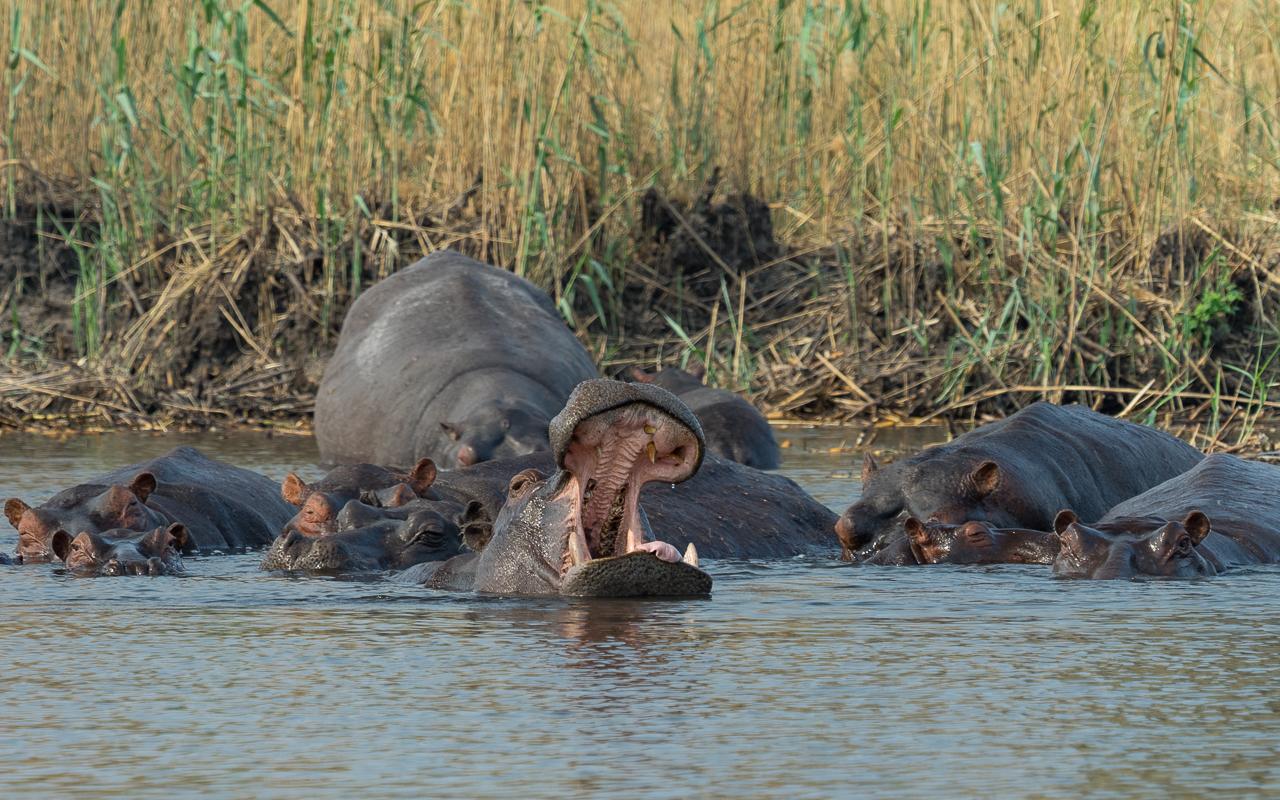
Elephants - the world's largest population can be found in Chobe National Park in Botswana. 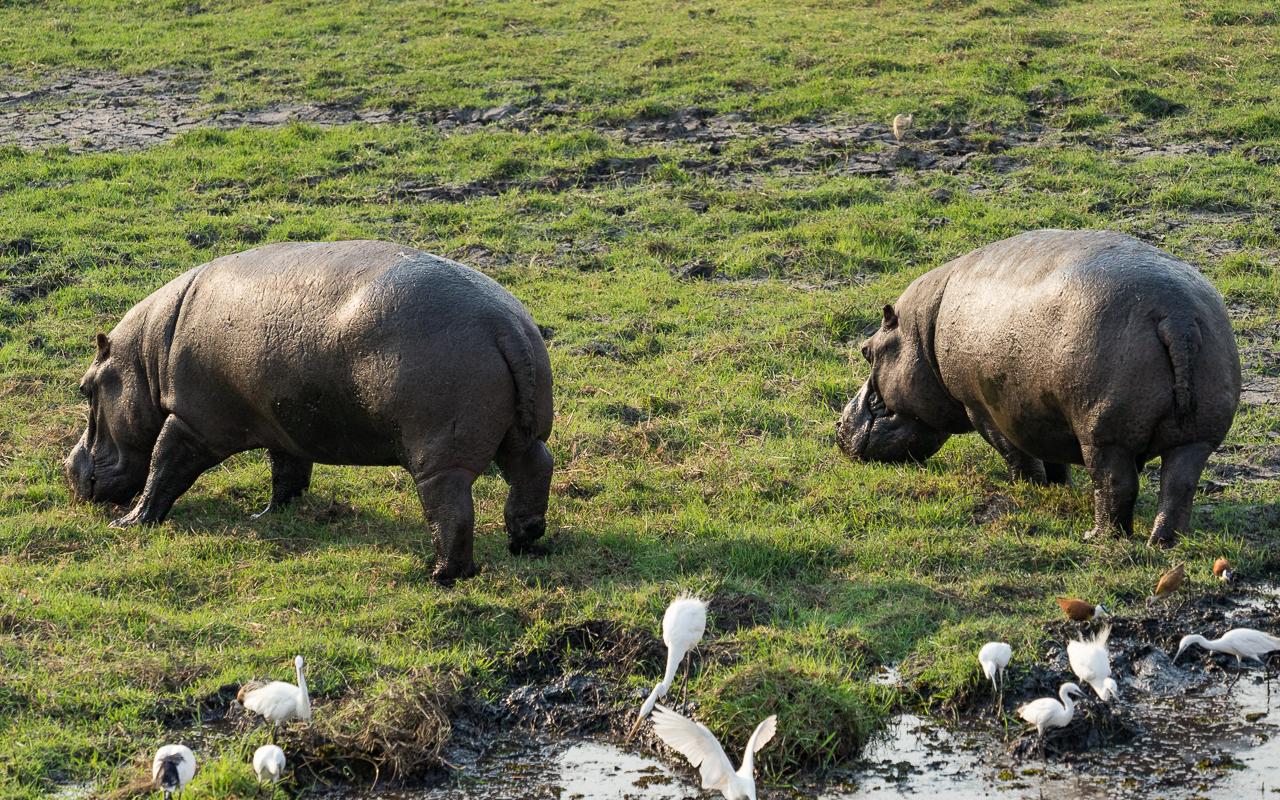 Hippos are also numerous here. They rarely leave the water during the day.
  Two young elephant bulls measure their strength
Tip for local activities:
Chobe Riverfront sunsetboat tour with Sidodu Island. Cost: 235 BWP or $36. Here you can see what are probably the largest herds of elephants in the world. You don't know where to look first. Elephants as far as the eye can see. That's not an exaggeration!
Detailed report: Trip to the Vitoria Falls in Zimbabwe
Before continuing to Savuti:
Refuel in Kasane or Kazungula (if you run out of diesel in Kasane like we did).
Stock up on food at the larger local supermarkets (Choppies & Spar).
Withdraw cash at the numerous ATMs (also at the supermarkets)
Accommodation in Kasane: Chobe Safari Lodge
The Chobe Safari Lodge, which is far too big for my taste, would not have been my first choice. However, due to our stay in Kasane during Botswana's 50th National Day, all accommodation on site was fully booked. For the first two nights we managed to get a last place on the campsite, the third night we were allowed to move into a room.
The lodge offers boat cruises on the Chobe River and many other activities. At the lodge's travel agency you can also book excursions to Zimbabwe to the Victoria Falls. If desired, this can include a helicopter flight over the falls, which we did.
Link to the website of the lodge

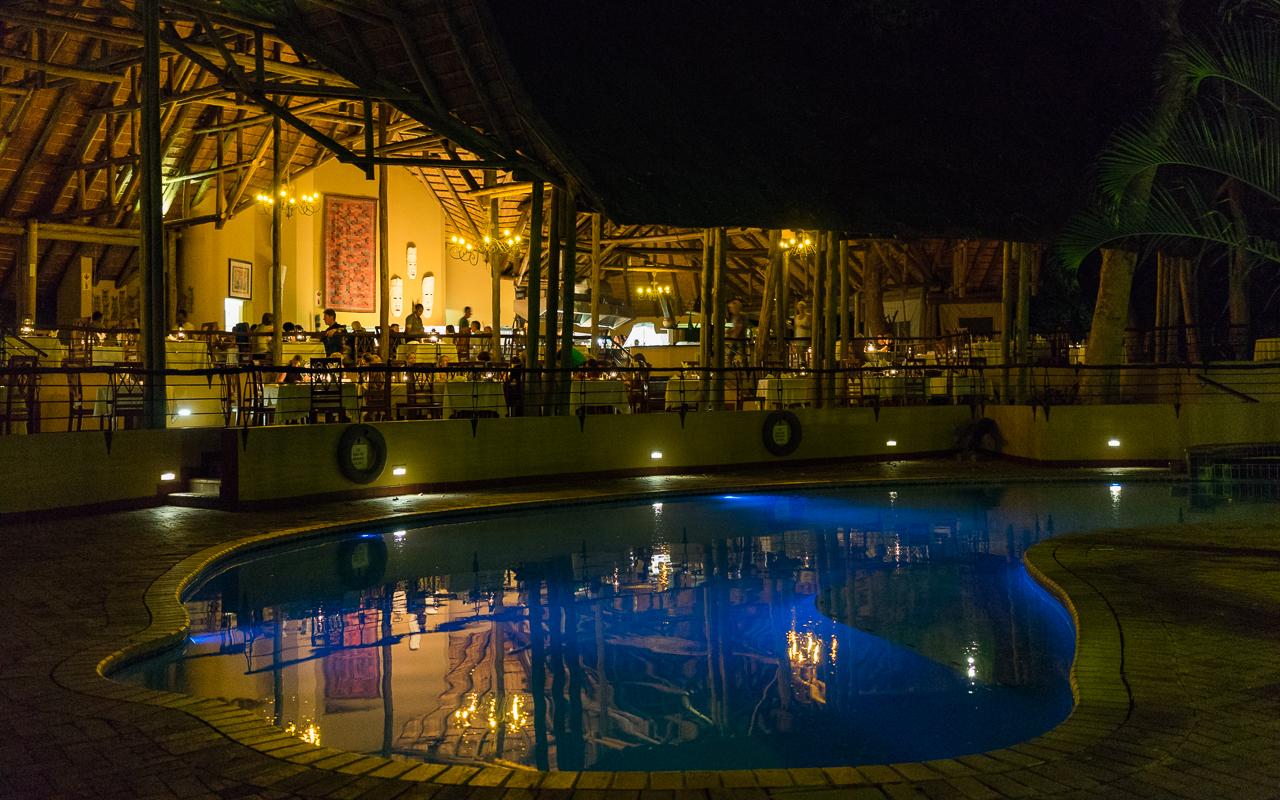

View directly onto the Chobe River - camping at the Chobe Riverside is beautiful Savuti (Chobe National Park)
Before leaving Kasane we say goodbye to our families via email and Whatsapp messages.
Because: From now on it gets wild - we drive right into the rough wilderness and the sandy landscape of Savuti.
After the tarred road ends in Kachikau, we let the air out of our tyres. It's onto challenging (very challenging) deep sand tracks! The story about the drive is a longer one, I will report about it (with video) in detail. A tip beforehand: In the dry season, definitely take the route via Linyanti, not the direct one to Savuti. You can probably guess which one we took ...

In any case, I earned a lot of respect from a local guide when I arrived at Ghoma Gate ahead of him. Without getting stuck, without getting a flat tyre! Whew.

The sandy road to Savuti is deep and very bumpy!
When we reach the entrance to Savuti Campsite, I am relieved. As a reward I treat myself to a cool Savanna Dry. One evening we grill sweet potatoes, the next corn on the cob. We have salad with it and watch the hustle and bustle at the campsite, because here, too, there is deep sand and men unfortunately forget that you should rather put the car in reverse gear than accelerate more.
In any case, the Landcruiser of our campsite neighbours digs itself deeper and deeper into the sand (hach the Germans, we grin and amuse ourselves).
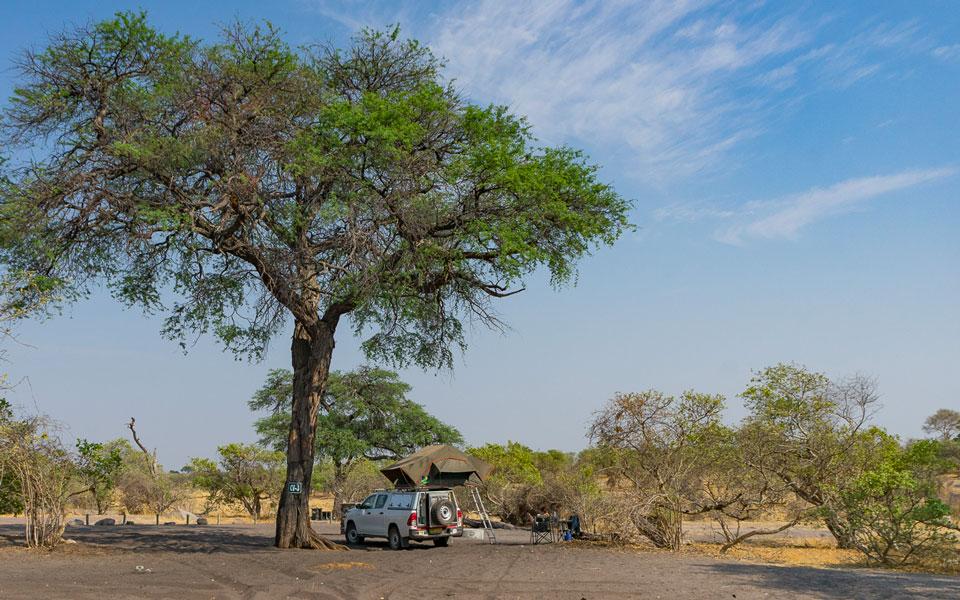
Even though "multiple offenders" in Botswana say that the Savuti Campsite has lost its flair, we found it wonderful here.
On the dry riverbed of the Savuti Channel in front of our campsite, herds of elephants, zebras, wild beest, impalas and warthogs pass by again and again.
Before we crawl into the tent, I enjoy the view of the starry sky, which is clearer here than at any other place on our trip. During the night we hear lions roaring, hyenas howling and in the morning a big elephant walks comfortably past our tent. There is nothing better than lying in the roof tent and watching animals.

The sunset in Savuti is - as always in Africa - wonderful and impossible to capture with a camera. 
By the way, nowhere else are the chances of seeing lions and leopards as high as here. Unfortunately, we only hear them at night, while others are luckier. But it is also difficult to concentrate on the deep sand and the sighting of animals at the same time. Especially in the dry season, when the grass is burnt yellow and relatively high.
We stay here for two nights before heading to Moremi National Park. Game drives are possible here on countless sand tracks. The rangers at the park entrance know about most of the sightings and conditions of the tracks. They always give information, even if they are often bored.
Accommodation in Savuti: Savuti Campsite
According to Botswana fans who have been here many times, the campsite suffered from a lack of charm, as the Abolution Block was surrounded by a high concrete wall. The elephants had repeatedly trampled this area to get to the water for the showers. We found our campsite beautiful, only the other cars were a bit annoying from time to time.
I think that the noise from "toilet tourism" (that's what we called it, because officially you are not allowed to go to the Abolution Blocks without a vehicle - we did it anyway) discourages animals from visiting the camp during the day. In addition, fixed tents were installed at the entrance area. These were probably once the most popular places to spend the night. The lion roar at night usually came from this direction.
Accommodation has to be booked through SKL Camps (website) (email: reservations@sklcamps.co.bw). My request was first refused. When I arrived on site, there were suddenly several free places at the campsite.
Savuti Camp to Moremi National Park (Third Bridge)
The night before we leave for Moremi we hear elephants trumpeting and also twice lions roaring. We leave before 8 am. The best route in the dry season is the Marsh Route - also the more beautiful, as it runs along the Savute Marsh. So we take this little diversions and don't regret it. The route is beautiful and much less sandy.
We see animals almost every minute: Impala, elephants, kudu, giraffes and suddenly there is a pack of wid dogs right next to the track! The dogs are endangered and extremely rare. The fact that we see a whole pack - even with cubs - is all the more unique.
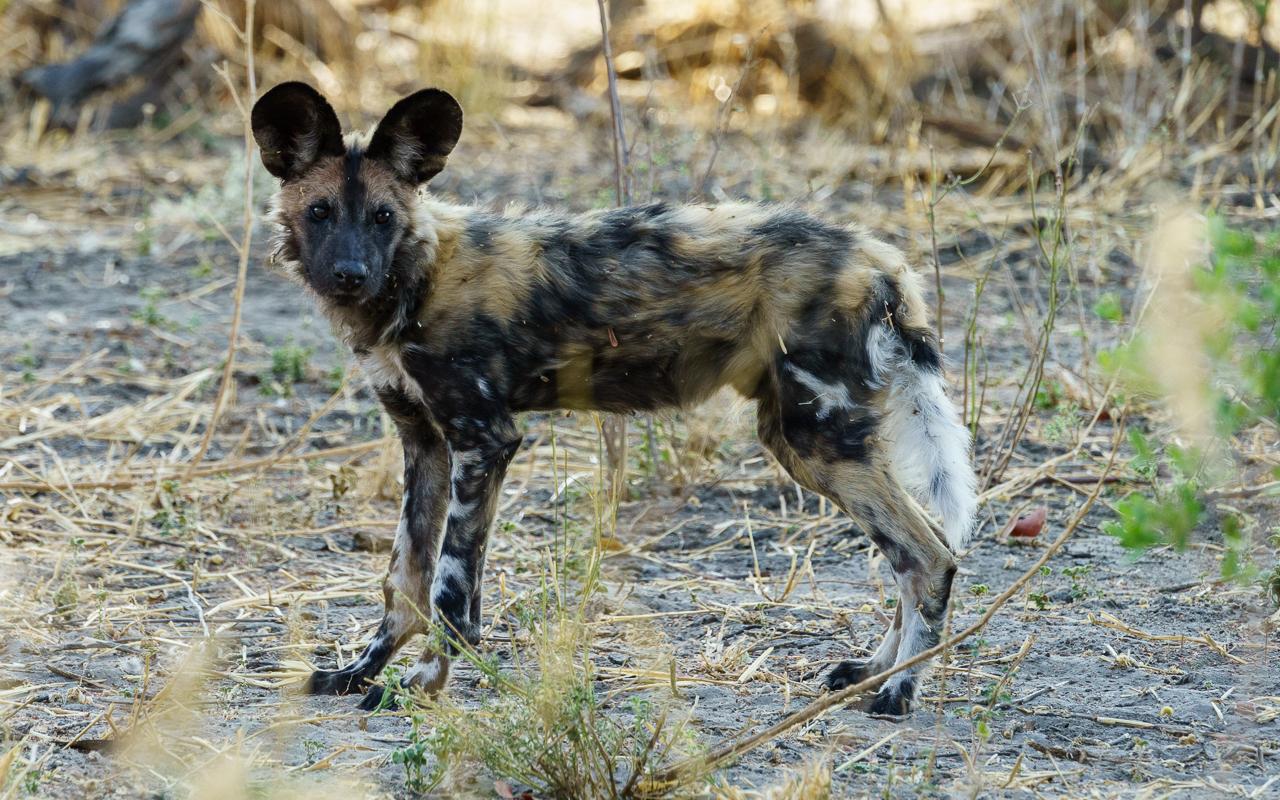
WIld Dogs are threatened with extinction - in Savuti we meet a whole pack. 

 A lone elephant meets us on the Marsh Route in Savuti
At some point there are no more signs. We don't find the turn-off marked on the maps either. After driving in circles once, I give up. I decide to take the diversions and the worse and sandy track over the Sandveld Road. Over a mixture of deep sand and humpy tracks we reach Mababe Gate 5 hours later (much later than planned). The drive was still very beautiful.

One of my favourite pictures of this trip: A herd of zebras
After two more hours we reach the North Gate. Another hour later and crossing the Third Bridge, which is only half standing, we finally reach the Third Bridge Campsite. Our night's lodging for today.

Moremi National Park: We cross the first bridge directly at the North Gate.  Third Bridge in Moremi: You have to cross this bridge if you want to get to the Third Bridge Campsite.
Accommodation in Moremi National Park: Third Bridge Campsite
The Third Bridge Campsite is situated in the west of the Moremi National Park directly at the Moanachira River. Of course there are hippos here and since there is water, there are probably lions prowling around from time to time.
The campsite is booked through the Xomae Group via email (link to website).

The starry sky and the Milky Way above the Third Bridge Campsite  Our place for one night at the Third Bridge Campsite Okavango Delta (flight)
After an extremely short night we didn't really need an alarm clock at 5.30am. I had to go to the toilet urgently and every time I wanted to go, new animal noises sounded. Mainly hyenas and hippos, which made the 500 m walk to the Abolution Block impossible. We have to leave very early. Why? The previous day we learned that our flight from Maun to the Okavango Delta leaves at 11:50 am. We have to be at the airport by 11 am.
So we set off and don't do a leisurely game drive with photo stops on the way to Maun. I steer us more and more safely through the sandy moguls. It is even fun! When we reach the gate we don't yet know how incredibly bad the track is all the way to the tarred road.
I don't believe the official at the gate at first when he says "unbelievably bad and bumpy. Very bad road".... At the beginning it's still OK. I slalom around the potholes. But at some point the road turns into a sandy track with edges that look like they have been broken off. Deep sand, potholes and we don't have time to ride comfortably...
10:21 a.m. Unbelievable but true. We can't believe it and wonder whether we can see a tarred road in the distance or not ... But - we have made it: Shorobe and the tarred road to Maun. I step on the gas even though I have to be careful as we still have too little air in the tyres (because of the low sand).

11:03 am Airport car park! We have reached our destination almost on time and 139 km later! Exhausted, we grab our backpacks and go to the office of Moremi Air. This small airline takes us directly to Gunn's Camp in the Okavango Delta!


Okavango Delta Botswana from above Okavango Delta Botswana
After only 25 minutes flight over the almost completely dry Okavango Delta our destination: Gunn's Camp! Glamping at its best with a view of swampland where an elephant herd cools and feeds.
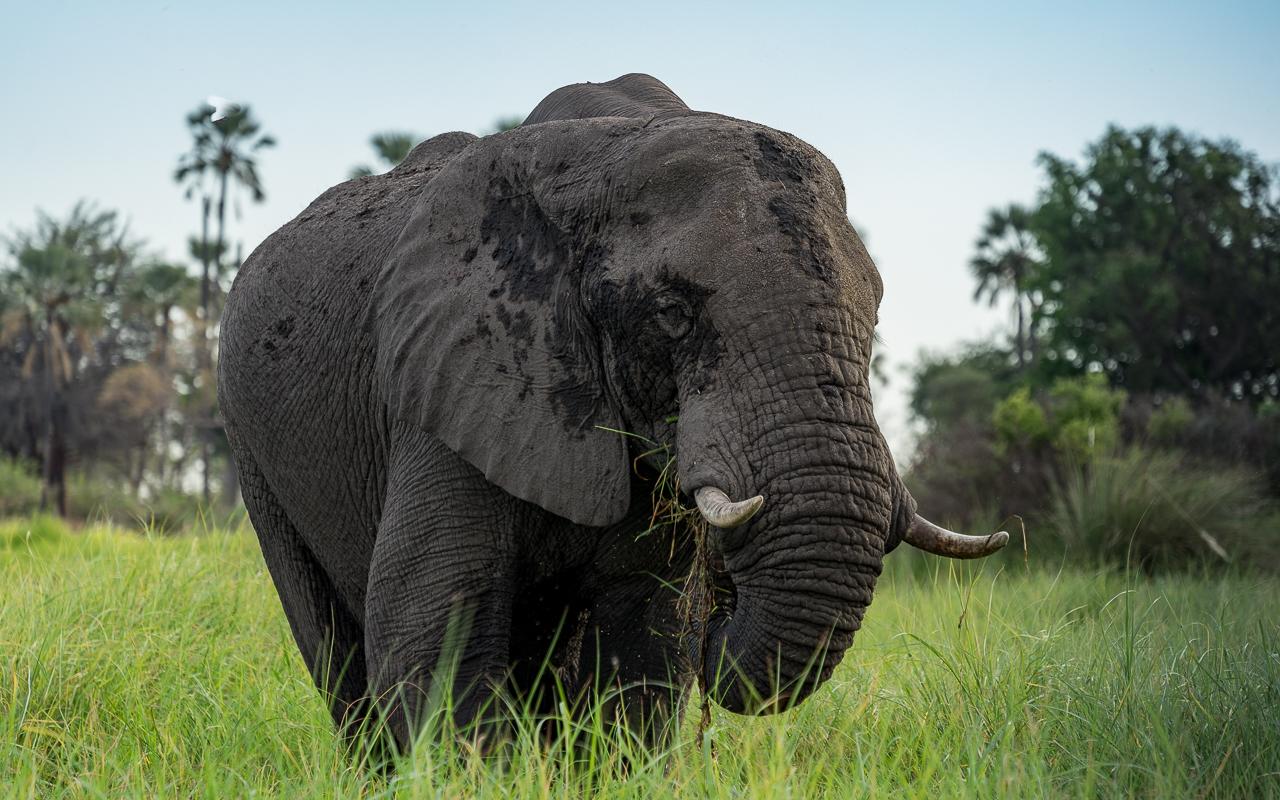
To welcome me, an elephant herd stands in front of my glamping tent at Gunn's Camp.
I can't imagine a more beautiful welcome! We stay here for two nights and go on walking safaris, mokoro rides and game drives in a boat on the main river Boro in the delta. This flows into the Northern Okavango and then becomes the Thamalakane River towards Maun.

Mokoro trips on the Boro River, which has little water during the dry season.
We then move to the neighbouring lodge for another 2 nights. Activities are the same here. The difference is only in the size of the lodges and the groups during the activities. Even on the mokoro walking tour we are in small groups. Here we again encounter large herds of elephants, hippos, lions, impala, kudu, zebra, giraffe, buffalo and numerous birds. The delta is a bird paradise in the dry season.


We meet two hyenas that wanted to cool off in mud holes. 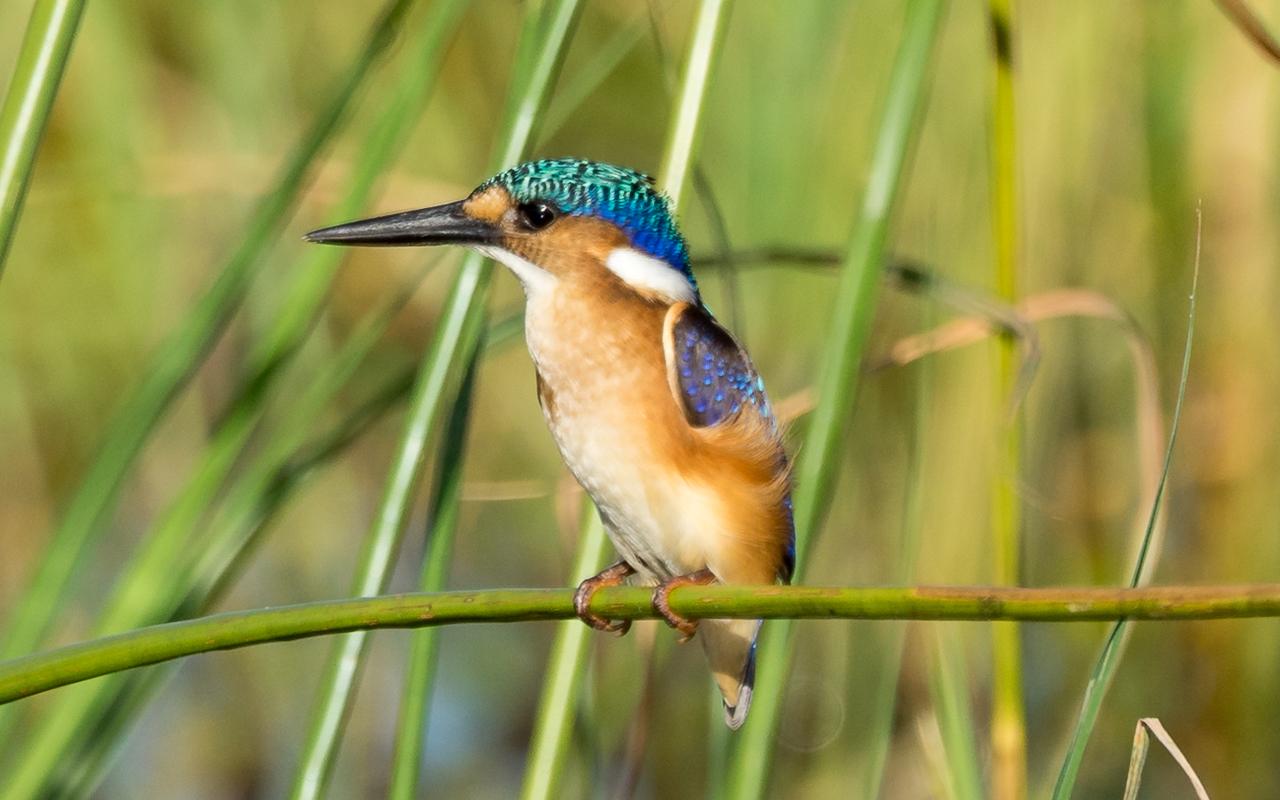

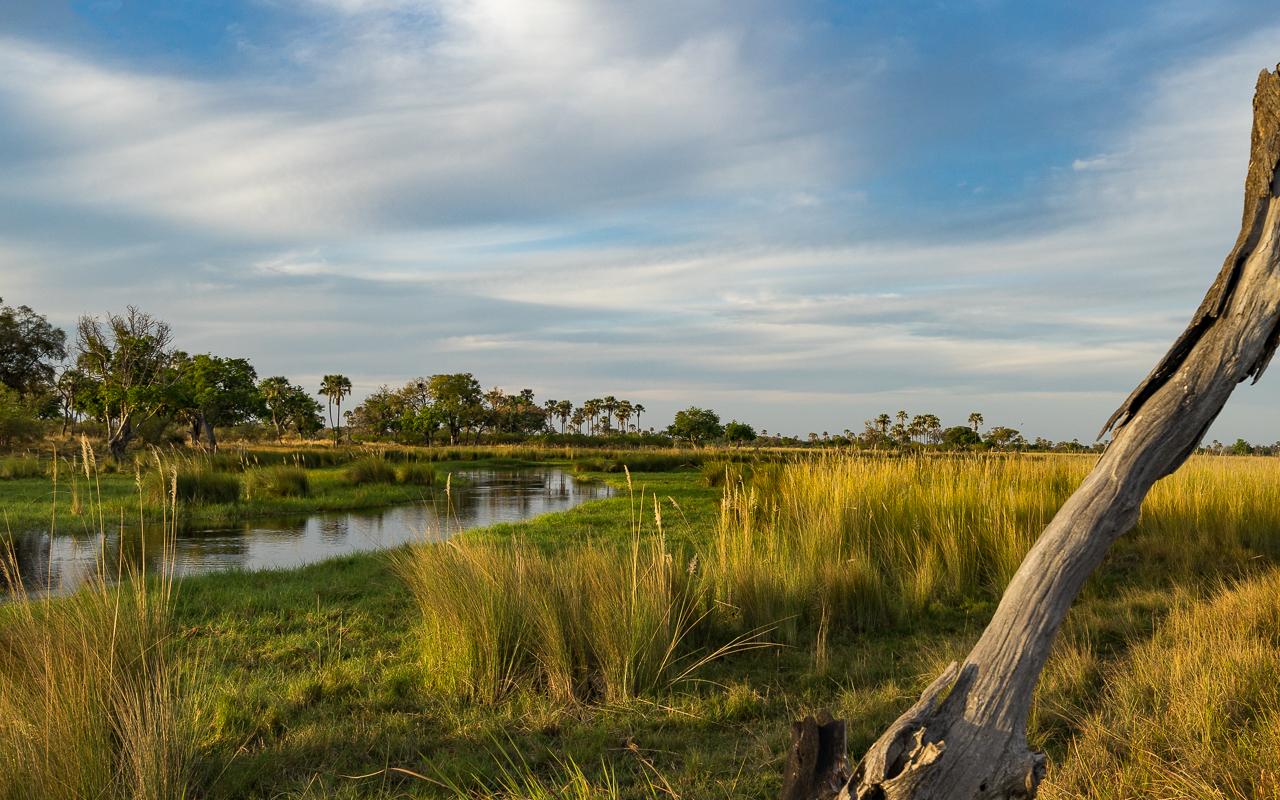 Beautiful Okavango Delta!
I liked the Bush Walks on Chiefs Island best. You never know what animals you will meet. Like on the last day, when suddenly everything is exciting.
First we meet a family of giraffes that looks curiously in our direction.

The giraffes see us from a distance and continue their way in the opposite direction.
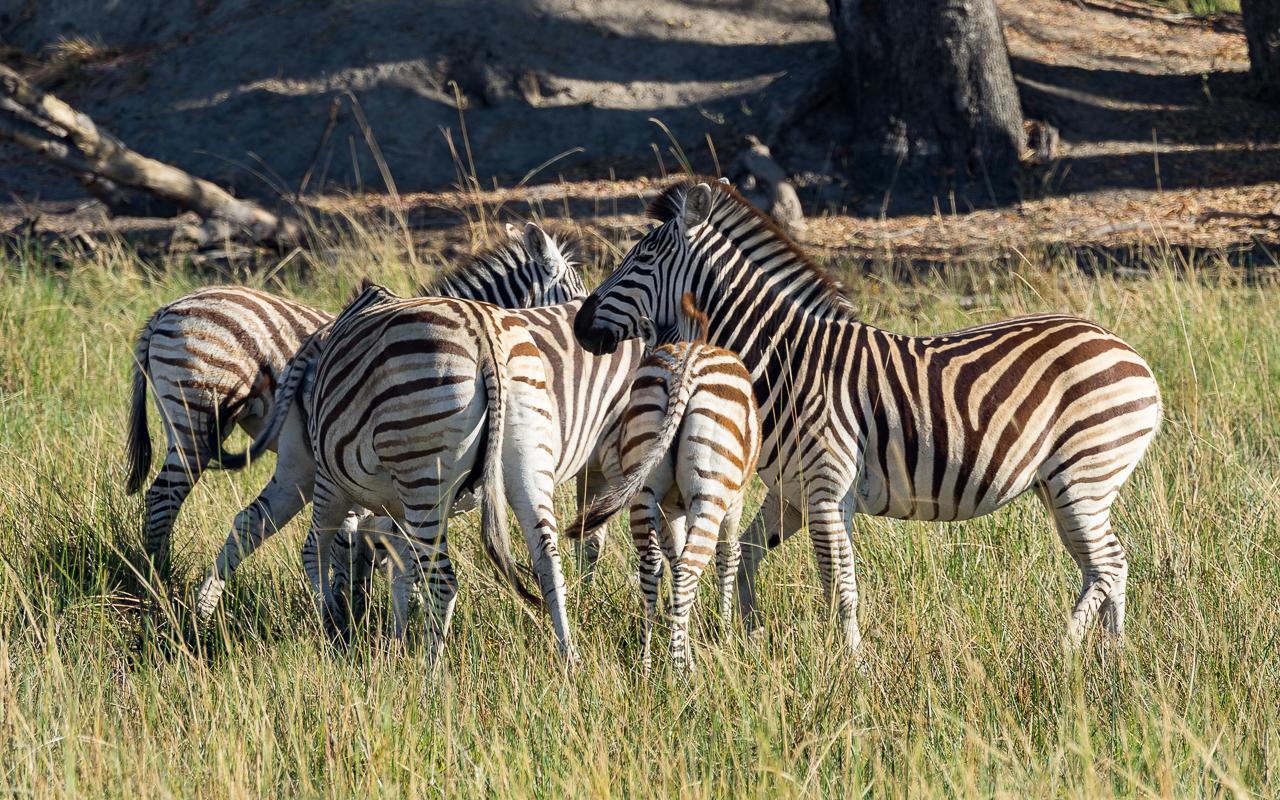
Then we meet several groups of zebras, which group together protectively to look bigger.
Followed by an elephant cow with her little one, they quickly approach us. From the other side another cow with her little one. We quickly move away, as elephant cows with young are unpredictable.

Then events take a turn for the worse. Suddenly we come across a drag mark on the ground that even I can recognise: a leopard has dragged its prey away, presumably to hide it in a tree from other predators.
But where is the killer and where is the prey?
We follow the trail with sharpened senses. The animals around us also sense the presence of a killer and run away from all directions, guinea fowls take refuge in trees. Baboons run away and impala also run away. On the right hand side sits a rare milky owl, striking with its pink eyelids and beautiful. We do not stop and follow the tracks on the sandy ground.

Milky Eagle in the Okavango Delta
After another 19 minutes we discover the victim: Impala. Our ranger Luckson takes a closer look at the dead animal. The leopard had just started to cut the animal into smaller pieces to bring it to safety on the tree from other predators. We probably disturbed it in the process.

Victim of a leopard: An impala. The body is still warm. Adrenalin on a walking safari.
Cautiously we walk on, the leopard must be somewhere close to us...we can see other fleeing animals a few metres in front of us. But the grass of the savannah is high and to meet a leopard on foot that is trying to hide its prey is not without its problems.
I think Luckson is deliberately leading us a bit away from the spot, not following fresh tracks but older ones. Nevertheless, we are all wide awake. Only a few metres further on we can see the boat on the shore. So close and yet so far. We drive off slowly and search the shore with binoculars. But no leopard is in sight.
Afterwards we take a shower and pack. The time in the Okavango Delta is coming to an end. At 14:30 we fly back to Maun in a small 4-seater plane.


Accommodation in the Okavango Delta: Gunn's Camp and Moremi Crossing
Overlooking the legendary Chief Island on the border of Moremi National Park , Gunn's Camp (website) and Moremi Crossing (website ) are perfectly situated lodges.
Gunn's Camp
Gunn's Camp is one of the last luxurious and classic safari camps in the Delta. Here you are offered luxury in a family atmosphere without missing out on game sightings.
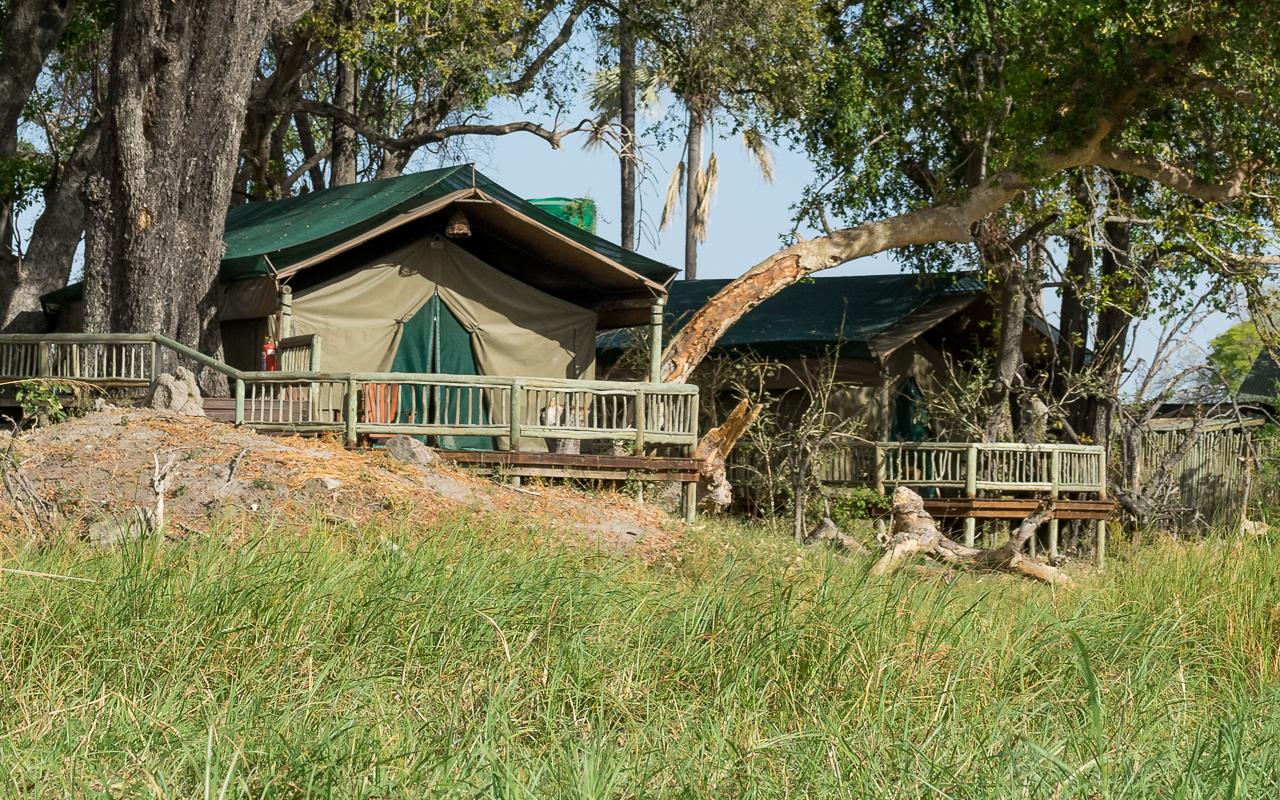

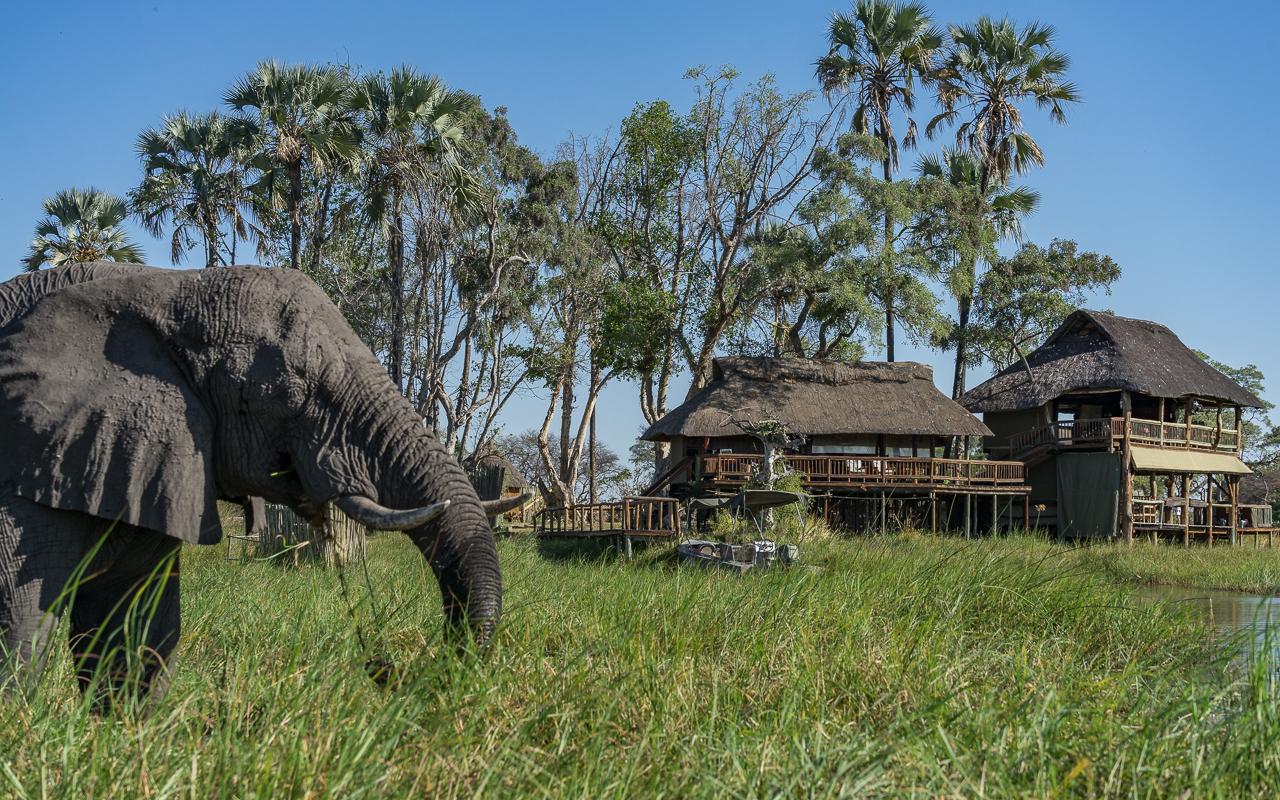
The Gunn's Camp main building is often visited by herds of elephants.
Moremi Crossing
Moremi Crossing is almost around the corner. Here the whole thing is not quite as familiar, as everything is a little larger so that tour groups can also spend the night in the Okavango Delta. But the tents are also nicely spread out along the river, so that you can experience the safari feeling up close.

My tent at Moremi Crossing Camp in the Okavango Delta Botswana  Maun
Maun
When we arrive in Maun, we find our car still as we left it in the airport car park. We stay in Maun for two nights to recharge our batteries, do some work and plan the next accommodation, book and change the original plan.
Accommodation in Maun: Old Bridge Backpackers
At the Old Bridge Backpackers, which was recommended to me by several people, we spend one night in a roof tent and one night in a fixed tent (with power sockets and private bathroom). The food is okay and so is the internet (best in the morning).
Apart from that, Maun doesn't have much to offer. For backpackers and travellers without a four-wheel drive vehicle, Maun is the starting point for the Okavango Delta. From here you can also go on day trips. We, however, travel on in the other direction.

From the tent you have a beautiful view of the Old Bridge  Nwetwe Pan
After three hours, the road that separates the Magkadigkadi Pans and the Nxai Pans leads us to Gweta. Here we book into the Planet Baobab (a tip from Britons we met on the way) for one night. The other night we spend under the starry sky of the Nwetwe Pan. As there is no room available on arrival, we do the tour on the first day. It is scalding hot. Temperatures around 40 degrees make me creep around slowly and sluggishly.
The name of the accommodation says it all - there are big baobab trees everywhere:
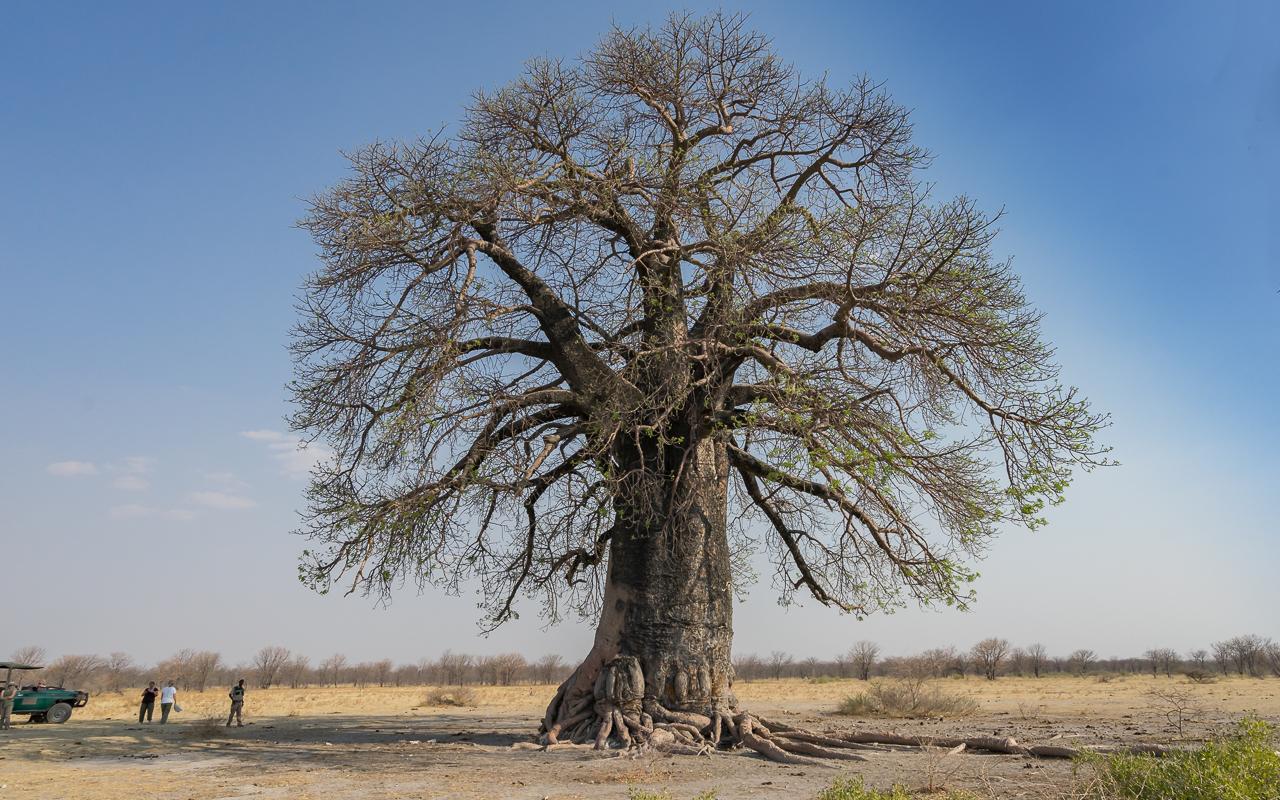
We pack a small backpack and are already at the next adventure: On the way to the meerkats, we see elephants (I would not have expected them here), many ostriches, cows and donkeys.
After visiting the meerkats, who are really cute to look at, you can continue by quad bike. I stay in the front seat of the Landcruiser.


When we arrive at the camp, we have refreshment towels and drinks. We eat some popcorn (steak, pumpkin, potato, tomato mozzarella salad and cornbread). Everything tastes twice as good around the campfire. Afterwards we keep quiet. It is as quiet as a mouse. Not a sound. It's amazing!


The half moon hangs over us like a lantern - I could have left the headlamp in the car Wow!
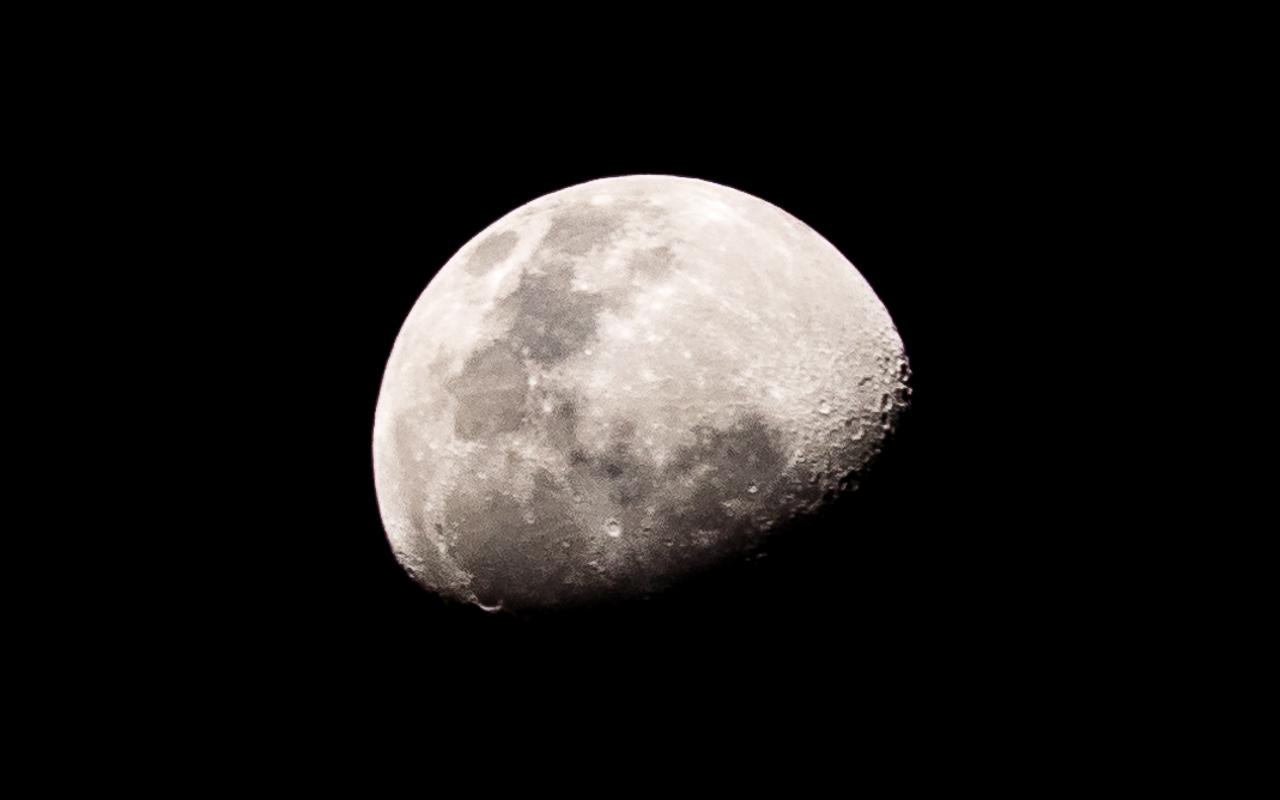
When I wake up in the night and the moon has set, I see the constellation Cassiopeia above me. The stars twinkle in the sky and wrap around us like a blanket! I am so spellbound that I refrain from taking pictures with the camera standing on the tripod next to me. I feel weightless in a vast universe. Only my breath can be heard. Otherwise, there is an incredible silence.
This mixture of salt desert, solitude and silence is a must for anyone who loves bizarre landscapes! Every now and then a lukewarm breeze blows around my face. But it remains pleasantly warm.
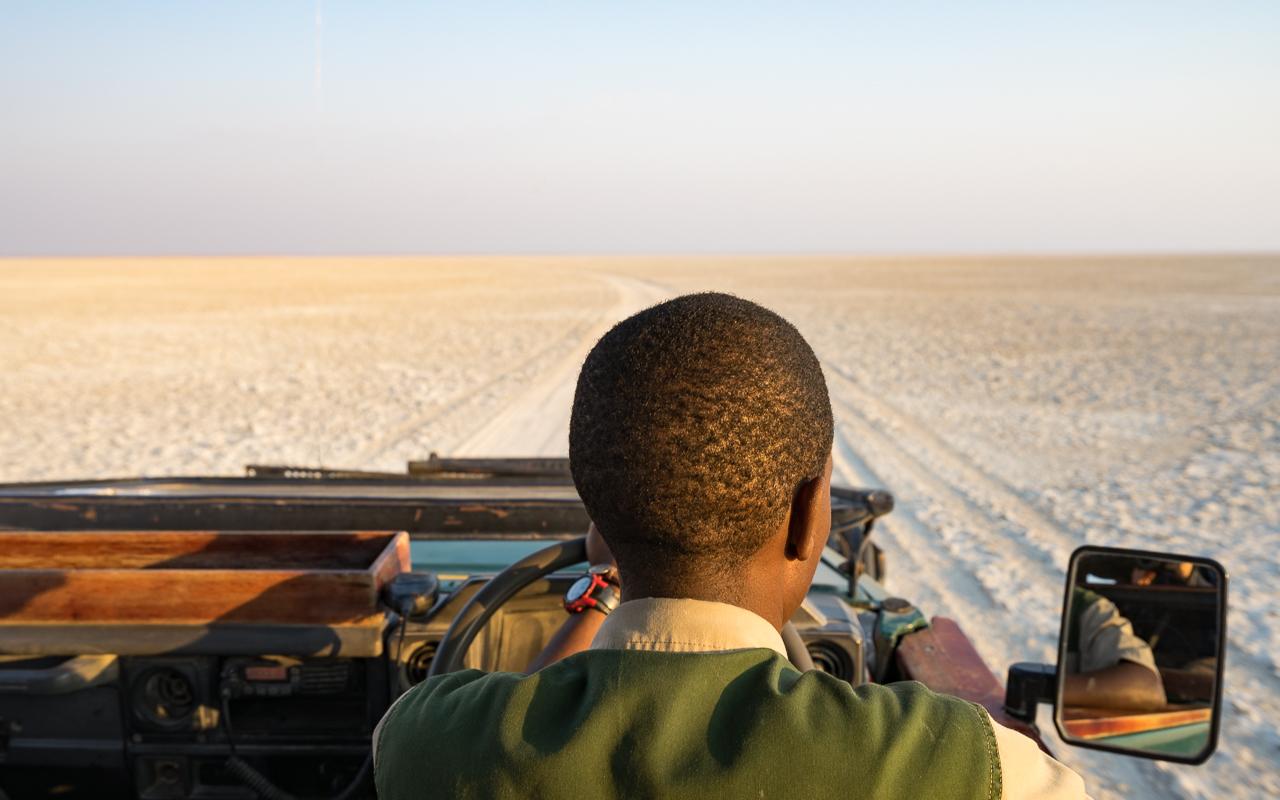
Gweta
We are back at Planet Baobab for breakfast. We check into our room and spend the day relaxing by the pool, reading about the rest of the route and route characteristics. For the next challenging drive into the Central Kalahari Game Reserve (CLGR for short) and over 60 km of sand await us.
It is again extremely hot and dry. During the day the thermometer again shows over 40° degrees. At night our hut is unbearably hot. Even with open windows (despite mosquitoes, which we don't care about) we don't get any cooling until 4 o'clock at night.
Planet Baobab is nice to rest for a day or to go on excursions from here. Unfortunately, a group of G-Adventures Americans breaks the silence and a German tour group also has unpleasant guests staring at us on board. I am looking forward to the Kalahari.
Link to the Planet Baobab website

Around Planet Baobab there are Baobab trees everywhere - in front of one I found a great hammock to relax in. Central Kalahari
Today we drive from Gweta into the Central Kalahari Game Reserve to Evolve Back Gham Dhao Lodge, where we stay for three nights. It takes us just over five hours to cover the 288 km.
On the drive through the national parks of the salt pans to Rakops we encounter over 30 ostriches, giraffes, oryx and of course impala. On the way, friendly oncoming locals announce speed cameras by flashing their headlights. We drive adapted. For the last two hours we drive on sand again. We let the air out of the tyres and I take over the wheel. By now we have a routine at it.
At the Evolve Back Gham Dhao Lodge we get a friendly welcome and a snack right away. Our glamping tent is beautiful.

Evolve Back Gham Dhao Lodge, Central Kalahari in Botswana
We freshen up and after a coffee with cake we head off for the game drive in 42 degree weather in the park.
We meet kudus, zebras, vultures, dykers, ibex and wildebeest. All the animals stand in the waterholes to cool off, which I can understand.
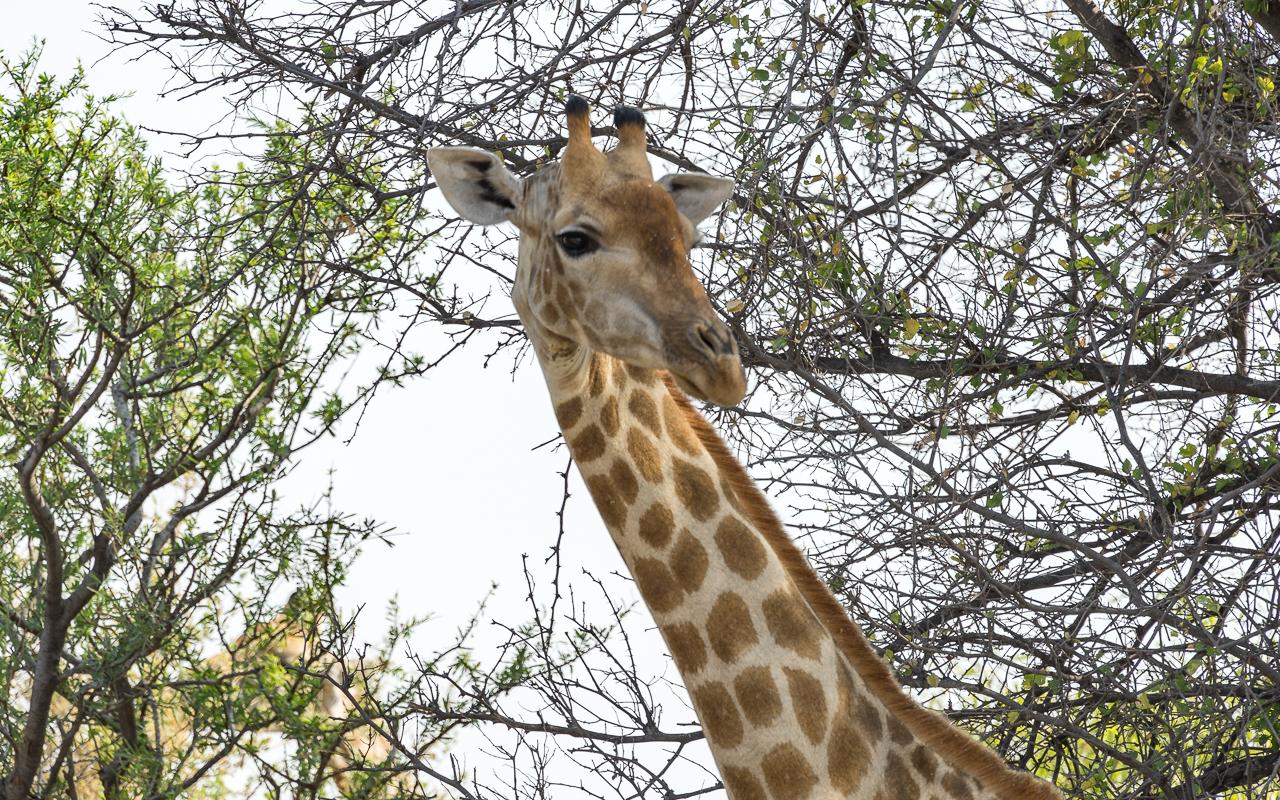

On the penultimate day we decide to drive into the Central Kalahari Game Reserve ourselves for a day. Deception Valley, Leopard Pan and Sunday Pan inflame my thirst for adventure after two days of game drives as co-drivers.