If you are looking for a different kind of southern Africa, Lesotho will amaze you, both because of the peculiarity of its people, the Basotho, and because of its topography with extreme differences in altitude. It is an essentially alpine country, whose inhabitants will welcome you along the way riding their horses on roads with dizzying curves. In Lesotho, you can enjoy magnificent treks - often on the famous Basotho ponies - through vast undulating expanses of bucolic charm, traditional rondavels and endless grazing sheep.
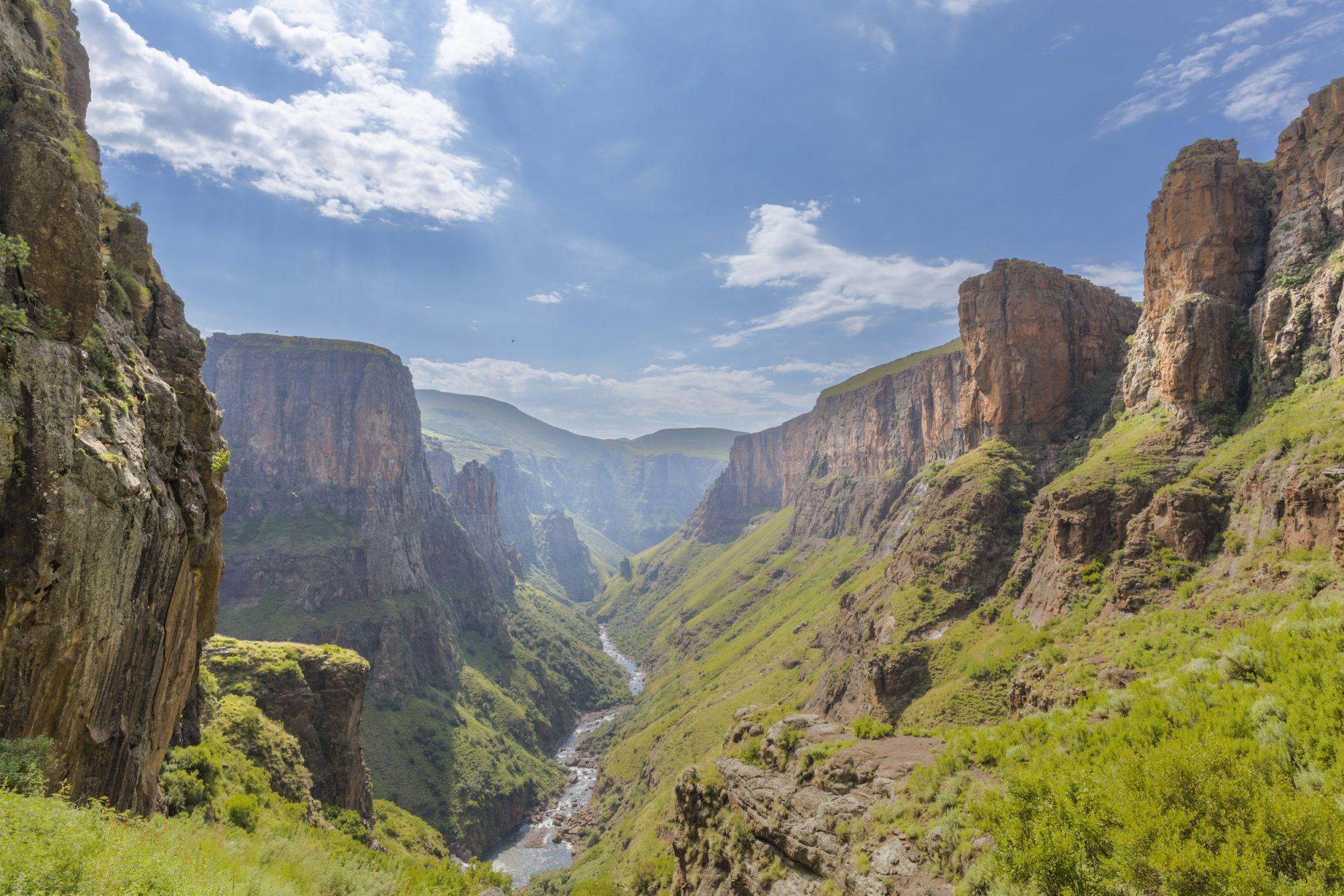
1 Ts'ehlanyane National Park
This national park, the most beautiful and accessible in Lesotho, covers an area of 56 square kilometres of unspoilt, rugged wilderness, including one of the country's few tracts of natural forest located between 2000 and 3000 metres above sea level. This park boasts spectacular rock formations, caves, cliffs and rich mineral deposits, as well as crystal-clear rivers and natural pools.
This 'cheche' forest - as the Basotho call it - is home to medicinal and ornamental plants, and in spring the blooming wildflowers attract rare species of migratory butterflies. This is one of the very few areas in Lesotho where it is possible to spot eland, and with a bit of luck you may also see grey deer antelopes, baboons, ice rats and the shy wild cats.
Within this park, there are magnificent routes that can be travelled on foot and on horseback. In addition to short trails, a 39-kilometre route to/from the Bokong Nature Reserve, which winds its way through some of Lesotho's most spectacular scenery, can be covered on foot or ponyback in a day.

Riding through the mountains of Lesotho ©Nadine Swart/Getty Images
2 Malealea
This remote village has three main attractions: a beautiful mountain landscape, a lodge located on a trading post and a thriving community-based tourism industry. Many visitors enter Lesotho and head straight for Malealea, either to get a glimpse of traditional Basotho life or to follow the advice of the plaque at the entrance to the village, which reads 'stop, traveller, and contemplate one of the gates of Paradise'. This area has been inhabited by humans for millennia, as evidenced by the numerous cave paintings found in the surrounding area.

A traditional village in Lesotho ©Gil.K/Shutterstock
3 Sani Top
Sani Top sits on top of the steep Sani Pass, the gateway to Lesotho from South Africa's KwaZulu-Natal province via the Drakensberg range, and offers magnificent views and plenty of hiking opportunities.
Situated on the summit of the Sani Pass at an altitude of 2874 metres, this lodge holds the record as the 'highest pub in Africa'. Apart from this detail, Sani Mountain Lodge rewards hikers who tackle the steep ascent from KwaZulu-Natal with cosy rondavels and excellent cuisine.
In winter, the snow cover is sometimes high enough to ski (but you must bring your own equipment); with advance notice, pony trekking and village visits can be arranged.

4 Katse Dam
Along the main road is the Katse Dam visitor centre, where you will find information, an exhibition and a terrace overlooking the dam. Easily recognisable by its electric blue roof, this centre is located a few kilometres east of the village of Katse. Guided tours along the dam wall (M30, 1 h) start at 9 a.m. and 2 p.m. on weekdays and at 9 a.m. and 11 a.m. on weekends and public holidays.

5 Sehlabathebe National Park
Lesotho's least-visited national park covers a remote, rugged and extremely scenic terrain. The gently rolling grasslands, vast expanses of wildflowers and absolute silence contribute to a sense of total isolation, with the only company being birds (including lamb vultures) and the occasional roe antelope. Hiking (or horseback riding from Sani Top or the Drakensberg) is the best way to see the waterfalls and their surroundings. During the rainy season, it is possible to fish in the park's reservoirs and streams.
6 The Central Highlands and Mafika-Lisiu
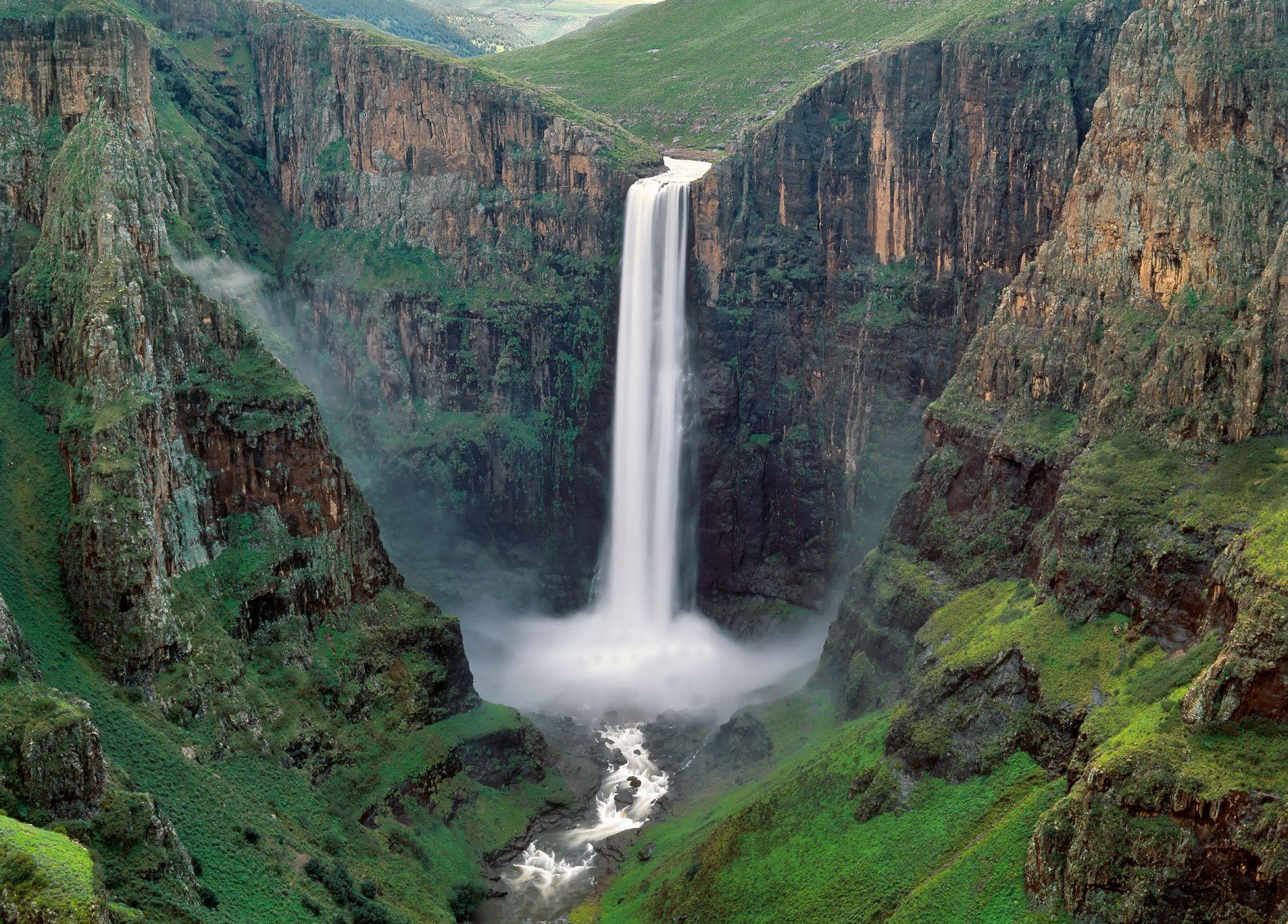
Lesotho's rugged hinterland is home to the country's two most iconic sights, namely the spectacular Maletsunyane Falls, the region's highest single drop waterfalls (almost twice as high as Victoria Falls), from which it is possible to make the world's longest uninterrupted abseil descent, and the spectacular Katse Dam, an extraordinary masterpiece of engineering, with a shimmering lake surrounded by undulating mountain slopes.
Apart from the engineering marvels, this area has an extraordinary variety of landscapes and can be reached from the plains via winding but spectacular passes such as the God Help Me Pass and the Mafika-Lisiu Pass (3090 m), one of the most beautiful roads in Lesotho.
7 Dinosaur footprints at Leribe (Hlotse)
Leribe (also called Hlotse) is a busy regional market place. In the days of British colonial rule, it was an important administrative centre, as evidenced by a group of old buildings, now in slow decline, lined up along the tree-lined streets. The main attractions are the dinosaur footprints around the city: about 7 kilometres north of the city, along the road leading to Butha-Buthe is the Subeng River group of footprints. To admire them, at the signpost, just before the road crosses the river, one has to walk about 500 metres down to a concrete causeway. On the right bank of the river, about 15 metres further downstream, you will see the ancient footprints of at least three species of dinosaurs.
8 Teyateyaneng, the handicraft capital
Teyateyaneng ('place of shifting sands'; often abbreviated to 'TY') constitutes the heart of Lesotho's handicraft production and is well worth a stop if you want to buy a beautiful tapestry or simply observe how they are woven.
When to go
March - April Cool autumn weather; the green grasslands are dotted with the lilac of cosmea flowers.
June - August Snow freezes on the mountain peaks and you can ski down the slopes at Afriski Mountain Resort.
November - December The Roof of Africa motorbike rally whizzes over the mountains among thousands of spectators.